REVIEW · FLORENCE
Medici Legends & Renaissance Wonders: Florence Small Group Tour
Book on Viator →Operated by All Around Florence · Bookable on Viator
Medici Florence, told street by street. This small-group tour threads the city’s biggest sights through the Medici lens, so you understand not just what you’re seeing, but why it mattered.
I especially like the way it squeezes a lot in without rushing you into chaos. You get two classic Florence beats (church/palace power) plus the Duomo complex story, all delivered with clear, human pacing in about 5 minutes per stop.
The only drawback to plan around: admission tickets aren’t included for most stops, so you’ll mostly enjoy the sights and explanations outside the ticketed areas unless you decide to purchase entries on your own.
In This Review
- Key highlights worth your time
- Why this Medici Legends tour works (even if it’s your first day)
- Price and what you’re really paying for
- Your route: start at Caffè Scudieri, finish by Ponte Vecchio
- Stop 1: Basilica di San Lorenzo and the Medici burial link
- Stop 2: Biblioteca Medicea Laurenziana and Michelangelo’s design idea
- Stops 3 and 4: Medici Chapels and Palazzo Medici Riccardi
- Stops 5 to 8 (and 9): the Duomo complex—Santa Maria del Fiore, Baptistery, Campanile, and Brunelleschi’s dome
- Stops 10 and 11: Palazzo Vecchio and Piazza della Signoria
- Stop 12: Ponte Vecchio and why the shops mattered
- Stop 13: Palazzo Pitti, Medici residence, and the idea of a “treasure house”
- Stop 14: Uffizi—how to look once you’re there
- The real star: the guide (and how the storytelling lands)
- Who should book this tour (and who should pick something else)
- Should you book Medici Legends & Renaissance Wonders?
- FAQ
- How long is the Florence Medici Legends tour?
- What size is the group?
- Is the tour in English?
- Are entrance tickets included?
- Where do I meet and where does it end?
- Does the tour include audio support?
Key highlights worth your time
- Medici connections everywhere: San Lorenzo, the Laurentian Library, the Medici Chapels, and palaces tie the whole walk together.
- A very small group (max 15): it stays personal and easier to hear your guide’s points.
- Whisper system included: audio support helps when you’re surrounded by street noise.
- Duomo + Baptistery + Campanile at close range: you’ll learn the “who designed what” behind the skyline.
- Ponte Vecchio with context: not just a postcard bridge, but a clue to how Florence traded and styled power.
- Uffizi-ready storytelling: even if you don’t enter that day, you’ll know what to look for.
Why this Medici Legends tour works (even if it’s your first day)
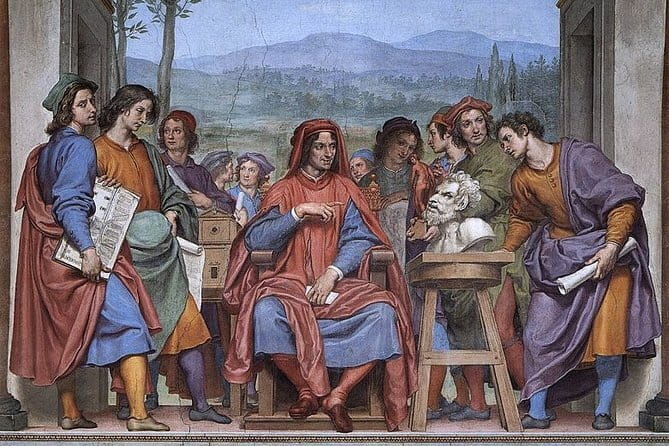
Florence can feel like a highlight reel that’s moving faster than your eyes. This tour helps slow it down by using one theme: the Medici family’s rise and how Renaissance Florence used art, architecture, and religious spaces to show authority.
What I like most is the “cause-and-effect” feel. Instead of treating each monument like a stand-alone trophy, the guide connects dots: the Medici fund or shape institutions, then Florence displays that influence in marble, manuscripts, domes, and grand civic spaces.
You’ll also leave with better wayfinding. After this, the city makes more sense. The Duomo isn’t just pretty; you understand the roles of designers and why the complex became a symbol. Same idea with Piazza della Signoria and Palazzo Vecchio—politics and art are braided together.
You can also read our reviews of more tours and experiences in Florence.
- Tuscany Day Trip from Florence: Siena, San Gimignano, Pisa and Lunch at a Winery
★ 5.0 · 21,634 reviews
Price and what you’re really paying for
The cost is $119.77 per person for about 1 hour 45 minutes. That’s not cheap, but you’re paying for three things that add up in Florence: a licensed guide, a small group, and a whisper system that helps you catch the explanation while you walk.
Also, timing matters. This tour is typically booked around 58 days in advance on average, which tells me demand is real. If you’re choosing a midday slot, booking earlier is a smart move.
One practical note: almost every stop lists admission tickets as not included. That doesn’t make the tour “less”—it changes how you should plan. Think of it as guided orientation plus spot-by-spot interpretation. If you want interior access (like the Duomo complex buildings or the Uffizi), you may need to add those entries separately.
Your route: start at Caffè Scudieri, finish by Ponte Vecchio
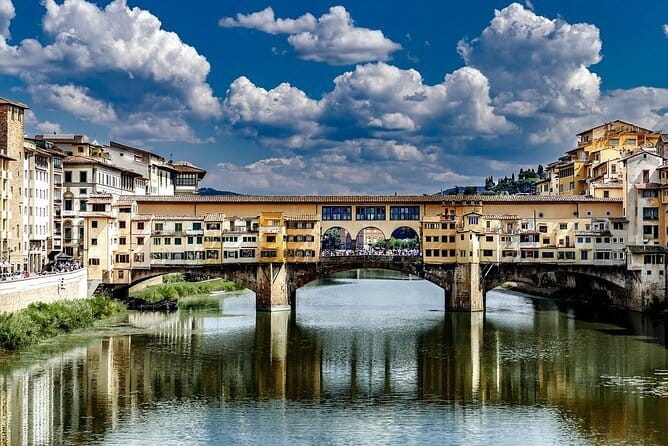
You meet at Caffè Scudieri Firenze on Piazza di San Giovanni, 19R (near public transport). The start time is 12:15 pm, and the tour ends around Ponte Vecchio (the exact finish point can shift slightly within the area).
Because it’s short and tightly paced, you’ll want to show up ready to walk. Wear comfortable shoes and bring a light layer—Florence weather changes fast, and this tour requires decent conditions. If weather forces a change, you’ll be offered a different date or a full refund.
And one more reality check: you’re doing a lot of “see and understand” rather than long sittings. That suits people who want a first-pass map of the city’s Renaissance power centers.
Stop 1: Basilica di San Lorenzo and the Medici burial link
San Lorenzo is one of the largest churches in Florence, sitting in the city’s main market district. What makes it Medici-relevant is simple and powerful: it’s the burial place for major members of the Medici family, from Cosimo il Vecchio through Cosimo III.
Even if you don’t go inside, you’ll benefit from knowing what to look for—this church wasn’t only a religious site. It was part of how the Medici anchored their legacy in public space.
This stop also helps your brain lock onto the tour’s theme. You start with a foundation: faith plus family authority, displayed where people already gathered for daily life.
Stop 2: Biblioteca Medicea Laurenziana and Michelangelo’s design idea
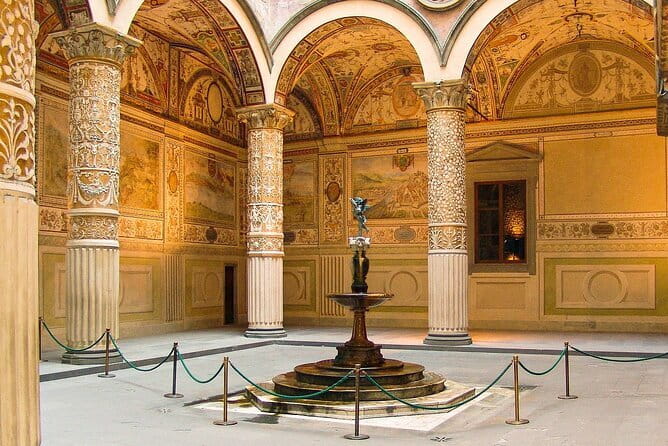
Next comes the Laurentian Library. It exists because the Medici pope Clement VII supported it, and the intent wasn’t just to store books. The message was clear: the Medici had evolved from merchants into a family of intellectual and ecclesiastical standing.
The library is also known for its architecture designed by Michelangelo, and it’s described as an example of Mannerism. That matters because Mannerism often feels a bit strained or dramatic compared to the calmer “perfect balance” you may expect from other Renaissance work.
Practically, this is where you’ll learn to see architecture as a political statement. “Design” isn’t only taste. It can be an argument.
- The Best tour in Florence: Renaissance & Medici Tales – guided by a STORYTELLER
★ 5.0 · 12,316 reviews
Stops 3 and 4: Medici Chapels and Palazzo Medici Riccardi
The Medici Chapels (Cappelle Medicee) were built between the 16th and 17th centuries as extensions to Brunelleschi’s earlier church. The purpose was to celebrate the Medici family and the Grand Dukes of Tuscany, with Michelangelo contributing to the Sagrestia Nuova (New Sacristy).
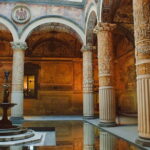
Then the tour shifts from sacred display to elite residence: Palazzo Medici Riccardi, designed for Cosimo de’ Medici. Construction is dated 1444 to 1484, and the point here is scale and ambition. You’re standing near the kind of building that made banking power look like cultural power.
These two stops together do something useful. They show how Medici influence works on two tracks at once:
- sacred spaces that legitimize the family
- palaces that make the family look like the center of society
Stops 5 to 8 (and 9): the Duomo complex—Santa Maria del Fiore, Baptistery, Campanile, and Brunelleschi’s dome
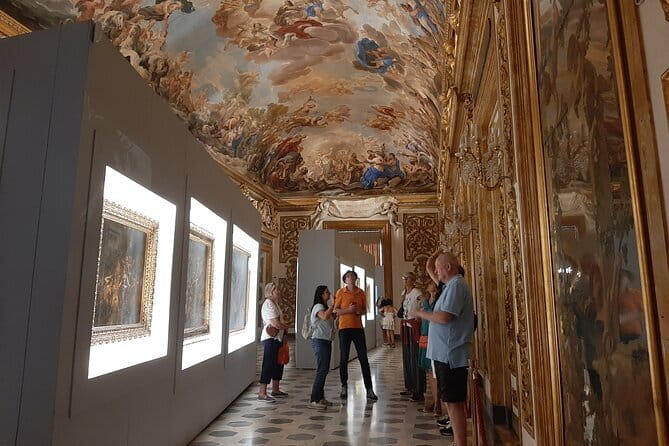
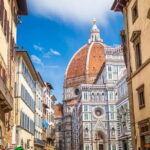
This is the section most people remember, and for good reason. You hit the cathedral complex in Piazza del Duomo: the Cattedrale di Santa Maria del Fiore, the Baptistery of Saint John, and Giotto’s Campanile, plus the dome of Brunelleschi.
Key details you’ll hear that help your eyes:
- The cathedral began in 1296 with a Gothic design attributed to Arnolfo di Cambio.
- The Baptistery was constructed roughly 1059–1128 in the Florentine Romanesque style.
- Giotto’s Campanile is known for sculptural decoration and polychrome marble encrustations.
- Brunelleschi’s dome was the largest brick dome ever constructed and remains the largest brick dome of its kind.
One reality: tickets for parts of this complex are not included in the tour price. That means you should treat this as a guided “read the complex” experience. If you do buy entry later, you’ll already understand the basic designers, the building logic, and why the whole cluster became a UNESCO World Heritage highlight.
Stops 10 and 11: Palazzo Vecchio and Piazza della Signoria
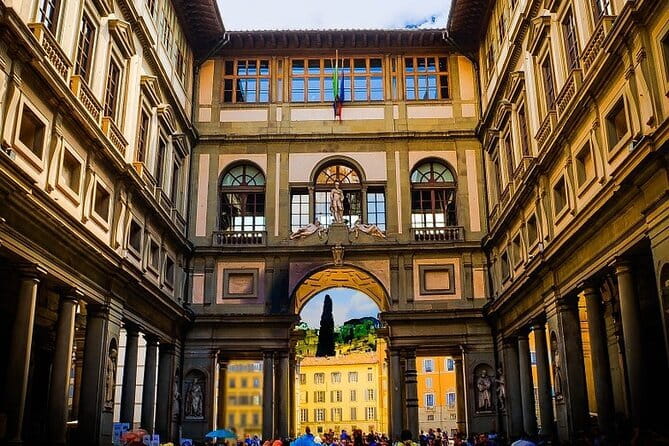
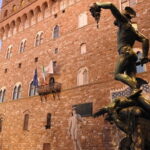
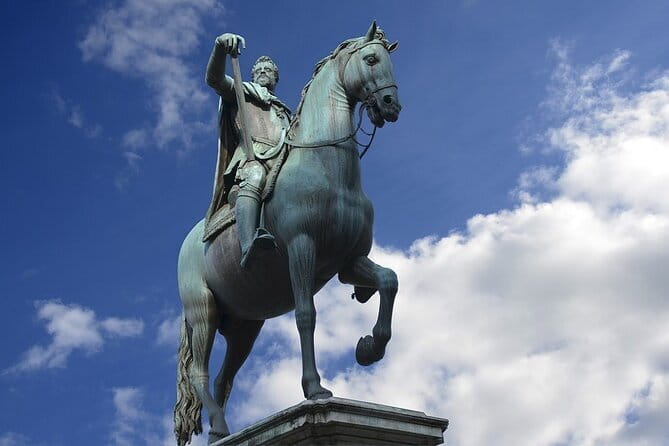
Then the tour moves from religious symbolism to civic power. Palazzo Vecchio is the town hall, shaped like a fortress-palace, and it’s a major public stage in Tuscany. The square in front—Piazza della Signoria—is the L-shaped meeting point where locals and visitors converge.
You’ll also get context for the visual rhythm of the area: it links the cathedral side of Florence with the civic and cultural identity that developed around the government center.
This is another moment where the Medici theme matters. The family’s influence didn’t live only in churches and libraries. It also shaped how Florence governed, represented itself, and staged power in public view.
Stop 12: Ponte Vecchio and why the shops mattered
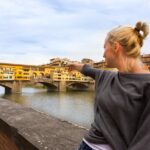
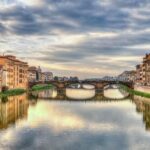
Ponte Vecchio is one of those places you recognize instantly. The tour’s angle helps you see past the postcard. This is Florence’s oldest bridge over the Arno, and it’s famous for shops built along it.
Historically, those shops were occupied by trades like butchers, tanners, and farmers. Over time, the tenants became jewelers and art dealers. That shift is a clue to how the economy and social prestige changed around the Medici era and beyond.
Good news: Ponte Vecchio is listed as free, so you can enjoy it without adding tickets. It’s a great decompression moment after a string of monuments.
Stop 13: Palazzo Pitti, Medici residence, and the idea of a “treasure house”
Palazzo Pitti became a major Medici move. The Medici bought it in 1549, and it became the chief residence for ruling families of the Grand Duchy of Tuscany. Over time, it grew into a treasure house as later generations added art and luxury items.
This stop gives you a different lens on wealth. Earlier, wealth is power displayed through burial, church extensions, and banking-linked palaces. Here, wealth becomes collection—paintings and prized objects stored and curated as status.
Even if you don’t enter the palace, knowing that it started as Medici headquarters changes how you read the building. It stops being just another big facade and becomes a chapter in the Medici story.
Stop 14: Uffizi—how to look once you’re there
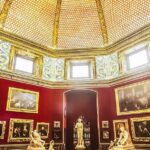
The tour ends with the Uffizi area and the museum’s big picture. Uffizi is one of Italy’s most important museums and is extremely well known for Renaissance paintings. You’ll hear names like Michelangelo, Leonardo da Vinci, Raphael, and Botticelli.
What makes this section valuable is that it sets you up to recognize themes when you visit later. The idea is that you won’t just “see paintings.” You’ll understand why those works belong together and how the period evolved from the 12th to the 16th centuries across the museum’s many halls.
Admission isn’t included in the tour data, so if you want to enter on the same day, you’ll need to plan that separately. The upside is that you can treat the tour like a guided primer, then turn it into a museum afternoon with a clear game plan.
The real star: the guide (and how the storytelling lands)
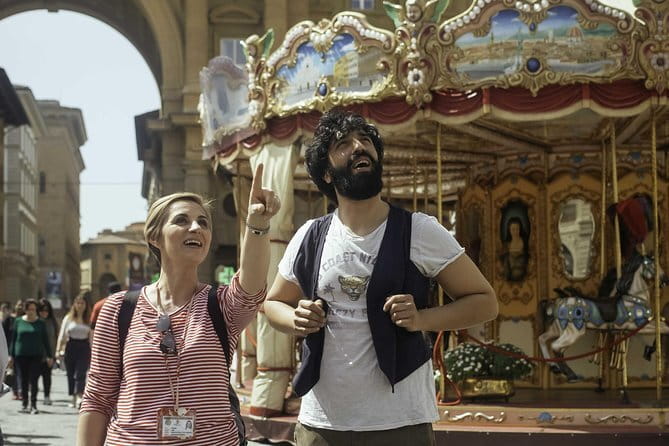
This kind of tour rises or falls on the guide, and you can feel the pattern in the tour’s overall reputation. People rave about guides who can connect facts to street-level reality—and several guides’ names show up again and again in accounts: Manuel, Martina, Giacomo, and Amanda.
You’ll likely experience a mix of:
- clear explanations tied directly to the buildings around you
- fun delivery, sometimes with humour or even light role-play
- answers to questions as you walk
- pacing that works for people who want context without getting trapped in a classroom
One note to keep expectations real: Florence street noise can be intense. The tour includes a whisper system, which usually helps a lot, but one account specifically suggested sound clarity while walking can still be a challenge for some people—especially with hearing aids. If that’s your situation, plan to ask what audio setup is used on your departure time and consider extra support if you need it.
Who should book this tour (and who should pick something else)
This tour is a strong choice if:
- you want a Medici-focused way to understand Florence fast
- you’re here for a short stay and want orientation before diving into museums
- you like Renaissance art and architecture but don’t want to feel lost
- you’re traveling with kids around 10+ (the tour is described as engaging for younger history lovers)
It’s also a good fit for second-time visitors who want a new angle. If you already know the obvious sights, the Medici storyline can make them feel fresh again.
However, if your top priority is an in-depth Medici museum experience inside dedicated collections, you may want to pair this with a separate Medici-focused ticketed visit. One disappointment pattern was that the Medici emphasis didn’t feel strong enough for some people who expected more museum-level Medici detail.
Should you book Medici Legends & Renaissance Wonders?
I’d book it if you want to get your bearings fast and understand Florence through one consistent storyline. The format—small group, short stops, guide-led connections—works well for first timers and for anyone who feels overwhelmed by Florence’s sheer volume of art and monuments.
I’d think twice if you expect lots of included interior entrances, because admission isn’t included for most stops. In that case, treat it as guided orientation plus an excellent setup for your own museum tickets later.
If your goal is to leave Florence with clearer answers—Who funded what? Who built for whom? Why do these buildings look the way they do?—this tour is a solid use of time.
FAQ
How long is the Florence Medici Legends tour?
It runs for about 1 hour 45 minutes.
What size is the group?
The group is limited to a maximum of 15 travelers.
Is the tour in English?
Yes, it’s offered in English.
Are entrance tickets included?
Admission tickets are not included for the listed sites (with Ponte Vecchio noted as free). You may need to buy tickets separately if you want to enter.
Where do I meet and where does it end?
You meet at Caffè Scudieri Firenze on Piazza di San Giovanni, 19R, and the tour ends in the Ponte Vecchio area.
Does the tour include audio support?
Yes. A whisper system is included.
You Might Also Enjoy

More Tours in Florence
- The Best tour in Florence: Renaissance & Medici Tales – guided by a STORYTELLER
★ 5.0 · 12,316 reviews

More Tour Reviews in Florence
- Tuscany Day Trip from Florence: Siena, San Gimignano, Pisa and Lunch at a Winery
★ 5.0 · 21,634 reviews - The Best tour in Florence: Renaissance & Medici Tales – guided by a STORYTELLER
★ 5.0 · 12,316 reviews