REVIEW · FLORENCE
Golf Cart Tour of Florence Michelangelo & Panoramic Hills
Book on Viator →Operated by Eco Tours Italia S.R.L. · Bookable on Viator
Electric carts make Florence feel like a moving museum. This 1 hour 45 minute ride mixes Renaissance art with science history, with frequent chances to hop out, look around, and catch photos from the right angles. What I like most is how it keeps you comfortable while covering serious ground, and how the route turns hilltop viewpoints and hillside villas into real, visitable places instead of just dots on a map.
One thing to consider: the tour can run with more than one cart if your group is larger, and audio can be harder to hear from farther back. If your group really wants to hear every bit of narration, choose a seat closer to the guide and be ready to ask questions.
In This Review
- The Most Interesting Parts You’ll Feel Immediately
- Why Florence by Electric Cart Feels More Like Florence
- Start at Piazzale Vittorio Veneto: Your Tour’s Pace Setter
- Porta Romana and Michelangelo Pistoletto: Art Starts Before the First Photo
- Bobolino Garden: Where Science and Beauty Share the Same Space
- Villa Galileo: House Arrest Turns Into a Story You Can Stand Beside
- INAF Arcetri Astrophysical Observatory: Castle Silhouettes and the Stars Angle
- Piazzale Michelangelo: Where the City Looks Like It Was Built for Pausing
- Basilica San Miniato al Monte (Exterior): Romanesque Clues Without the Stair Challenge
- Villa del Poggio Imperiale: Medici Power Above the City
- Price and Timing: Does This $95.54 Tour Make Sense?
- Guide Style Matters: Why Luca, Aldo, Claudio, and Others Get Named
- Getting the Most Out of Your Stops (Without Feeling Rushed)
- Who This Florence Golf Cart Tour Fits Best
- Should You Book This Golf Cart Tour of Florence?
- FAQ
- How long is the golf cart tour of Florence?
- Where does the tour start and end?
- What language is the tour offered in?
- Is this tour private?
- Which stops include admission fees?
- Can children join this tour?
- What if I need to cancel?
The Most Interesting Parts You’ll Feel Immediately
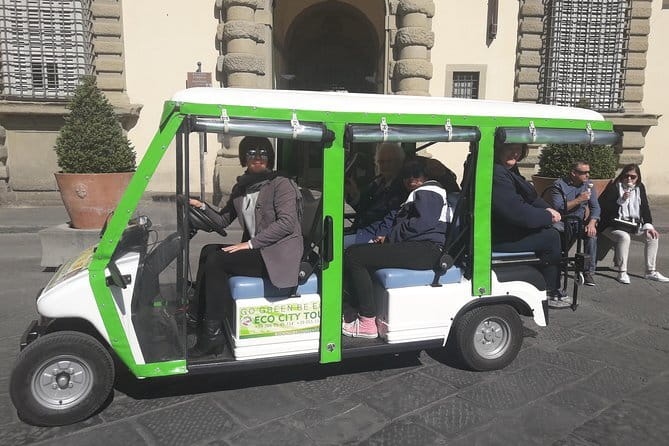
- Electric cart sightseeing that cuts down on hill fatigue without skipping the viewpoints
- Michelangelo and Galileo themes in the same loop, from gates and gardens to observatory territory
- Frequent stop-and-look breaks, so you’re not trapped watching through a windshield
- Piazzale Michelangelo at the end, timed to make the views feel like a payoff
- Guide-driven flexibility, with the option to adjust parts of the route to your group
Why Florence by Electric Cart Feels More Like Florence
Florence can be a tough city on the feet. Cobbles, slopes, and long walks between neighborhoods add up fast, especially if you’re visiting in warmer months or you’re juggling kids, parents, or just normal travel energy. An electric golf cart tour is a practical way to see more than you would on a purely walking plan, while still letting you get out and look up close.
The real win is speed with control. You move along key corridors, but you’re not racing past everything. You’ll get short, focused stops that let the story land—then you’re back in the shade and breeze rolling to the next spot.
And yes, it’s also a greener way to get around. It swaps exhaust-and-waiting for a quiet electric ride, which fits the whole idea of Florence as a city that’s worth respecting.
You can also read our reviews of more tours and experiences in Florence.
- Tuscany Day Trip from Florence: Siena, San Gimignano, Pisa and Lunch at a Winery
★ 5.0 · 21,634 reviews
Start at Piazzale Vittorio Veneto: Your Tour’s Pace Setter
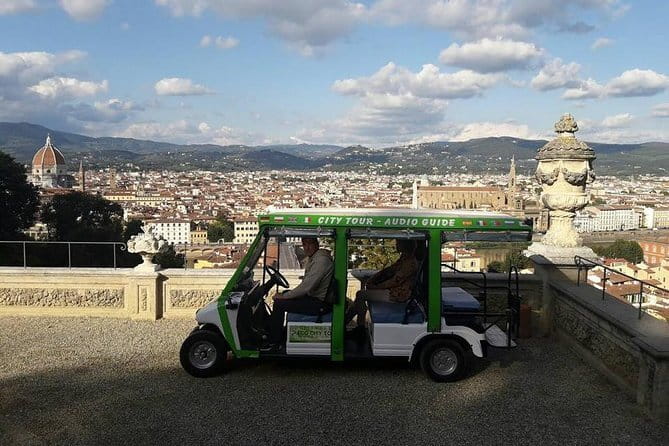
Most tours like this begin at a central overlook, and this one starts at Piazzale Vittorio Veneto. The benefit is simple: you’re ready to roll right away, and your route has room to move through different elevations without starting from a random alley.
From there, your guide steers the timing. A good guide keeps the pace steady so you don’t feel rushed at viewpoints, but you also don’t get stuck idling. One repeated theme in the guide feedback you’ll see—whether the guide is Luca, Aldo, Claudio, Alex, Tiziano, or Sebastián—is that the best tours keep you moving while making the stops feel meaningful.
If you’re the type who likes to ask questions on the spot, this is your window. The short breaks are built for back-and-forth: a quick look, a quick explanation, then you decide where you want to zoom in later on your own.
Porta Romana and Michelangelo Pistoletto: Art Starts Before the First Photo
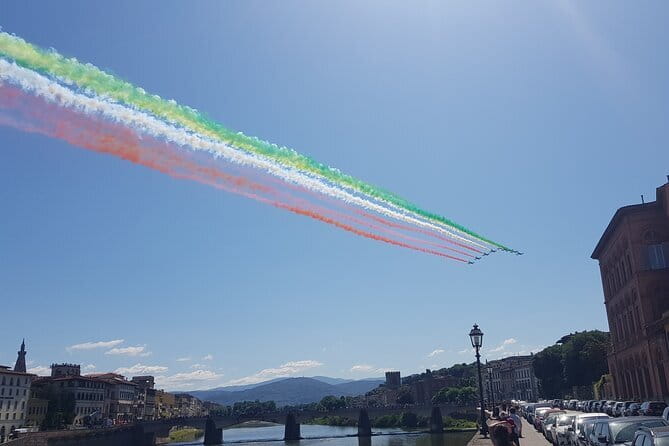
Your first stop is Porta Romana, one of Florence’s grand southern gate points. Even if you’ve seen plenty of gates in Europe, what works here is how Florence layers art into public spaces. You’ll also spot the marble sculpture Dietrofront by Michelangelo Pistoletto at the roundabout.
Why this matters: gates in Florence aren’t just architecture. They’re reminders that this city grew up with walls, gates, and movement—people entering, leaving, trading, and changing. Starting here gives you a historical spine before the route swings into gardens, villas, and star-gazing hills.
The stop is short (about 10 minutes), so treat it like an orientation moment. Look at proportions, street layout, and how the neighborhood opens out from the gate area. Then hop back in and keep going.
Bobolino Garden: Where Science and Beauty Share the Same Space
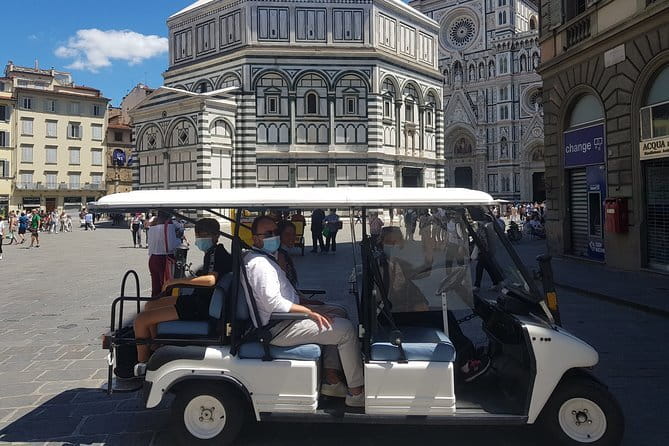
Next you’ll reach Giardino del Bobolino. The key connection is Galileo Galilei—the garden was an inspiration source for him, and the place still feels designed for quiet thinking. You get a short break (around 3 minutes), but it’s enough to reset your eyes after the streets and start noticing the view lines.
What I like about this stop is the concept. Florence isn’t only painting and marble. It’s also where ideas grew alongside aesthetics. Galileo’s link makes the garden more than a pretty pause—it becomes a clue that Florence’s Renaissance mindset wasn’t only visual. It was analytical, too.
Practical note: with a stop this brief, don’t plan to do a long wander. Snap your few photos, take in the overlook, and listen for the guide’s framing. Save your longer garden stroll for later if you fall in love with the vibe.
Villa Galileo: House Arrest Turns Into a Story You Can Stand Beside
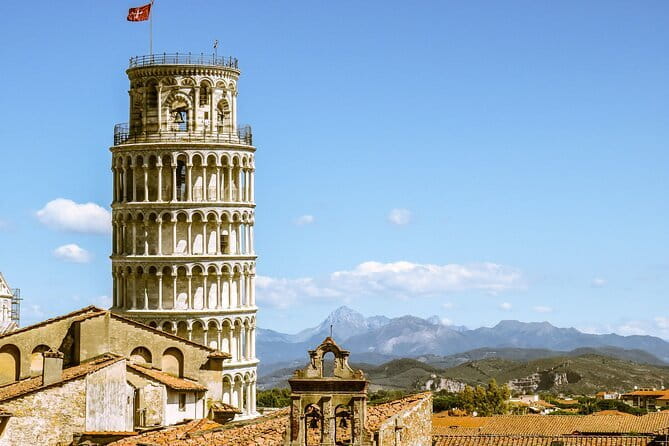
Then the tour heads to Villa Galileo. This is the peaceful outside view of the villa where Galileo lived under house arrest. The point isn’t to tour rooms—it’s to stand outside, connect the location to what happened there, and understand how life and science mixed under pressure.
You’re given about 10 minutes here. That’s just enough for the major takeaway: Galileo continued his studies and correspondence even while restricted, including letters to his daughter Suor Maria Celeste.
Drawback to watch: because it’s outside-focused, if you’re hoping for interior access, you won’t get it. But if you enjoy place-based history—figuring out why this spot mattered—it’s a strong stop because the narrative feels grounded.
- The Best tour in Florence: Renaissance & Medici Tales – guided by a STORYTELLER
★ 5.0 · 12,316 reviews




INAF Arcetri Astrophysical Observatory: Castle Silhouettes and the Stars Angle
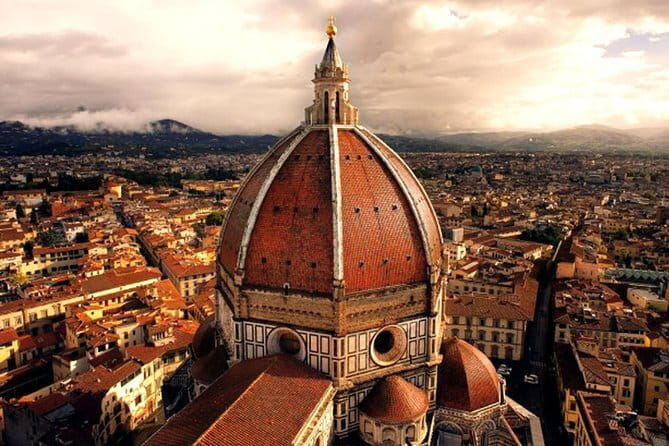
One of the most interesting segments is around Arcetri Astrophysical Observatory. You’ll first notice the silhouette of Arcetri Castle, then face the hillside observatory area—Florence’s window to the stars.
This stop is about 15 minutes, and admission is not included. That means you’ll likely treat it as a viewpoint and exterior orientation unless you pay separately or the schedule allows additional time.
Why it’s worth it anyway: most first-time Florence plans focus on church façades and art museums. This angle gives you a different Florence. The hilltop scale and the sense of distance are part of the astronomy story—you can feel why people looked outward from places like this.
If you’re very astronomy-driven, plan ahead so you’re not disappointed by the admission piece. If you’re more about the story than the technical visit, the stop length is perfect.
Piazzale Michelangelo: Where the City Looks Like It Was Built for Pausing
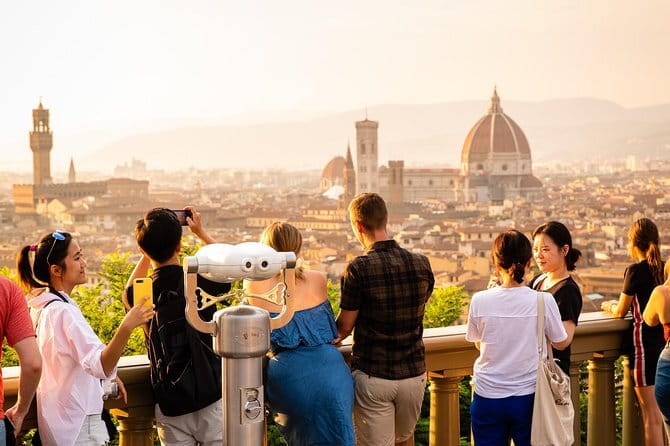
Ending at Piazzale Michelangelo is the “okay, now breathe” moment. This is Florence’s famous panoramic terrace, and it delivers the classic view: domes, towers, and bridges all lined up in one broad look.
You’ll get about 20 minutes here, and admission is free. That extra time is intentional. This is where you stop being a sightseer and start being a viewer. Take your photos, but also give your eyes time to scan slowly. Florence reward here is in the details—how the river curves, how neighborhoods layer, how light shifts across rooftops.
If you’ve got limited time in the city, this is a smart ending point because it helps you understand what you’ll want to revisit later. It’s not just pretty; it’s navigational. After you see this view once, you’ll recognize districts as you walk past them later.
Basilica San Miniato al Monte (Exterior): Romanesque Clues Without the Stair Challenge
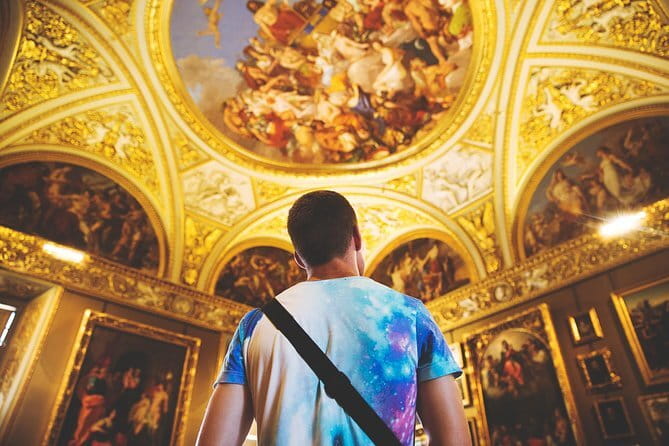
Next up is Basilica San Miniato al Monte. The tour focuses on the outside, describing Florence’s oldest Romanesque church and tying in legends, symbols, and the story of the saint.
You’ll have about 20 minutes. The value here is that you get the meaning without the full time commitment. If you’re conserving energy—or if stairs are an issue—an exterior stop can still be satisfying because guides can point out symbolic details you’d miss if you just passed by.
The only real consideration: you may have wanted interior access. But if your goal is orientation and stories, this outside format works well within a tight timeframe.
Villa del Poggio Imperiale: Medici Power Above the City
The tour continues to Villa del Poggio Imperiale, where you’ll see the elegant neoclassical villa once linked to the Medici family. Expect a short stop (about 15 minutes) with admission included.
This is a strong “power and position” stop. The villa overlooks the city, so the story isn’t just who lived here. It’s also why they built like this—status, control of views, and the lifestyle of Florence’s elite.
If you’re into the Medici thread, this final set of stops gives you a clear arc: from public art at gates, to Galileo’s thinking spaces, to how powerful families occupied the high ground. It all connects into a single picture of Florence as a place where ideas, power, and art shared geography.
Price and Timing: Does This $95.54 Tour Make Sense?
At $95.54 per person for roughly 1 hour 45 minutes, you’re paying for three things: convenience, guidance, and access to a tight route that’s hard to replicate quickly on foot.
Is it worth it? For most visitors, yes—especially if you want:
- a quick overview of multiple neighborhoods and viewpoints
- a break from the steep walking
- guided storytelling so the places don’t feel random
If your schedule is packed and you want to decide where to return later, the pacing is efficient. You get a lot of “first look” context in under two hours, which helps you plan the rest of your trip.
But if you’re the kind of traveler who enjoys long museum hours and slow wandering, you might feel the stop times are too short. This tour is designed to set your bearings, not to replace deeper visits.
Guide Style Matters: Why Luca, Aldo, Claudio, and Others Get Named
In the feedback for this experience, the guide experience is a major part of the satisfaction. Names you may see again and again—Luca, Aldo, Claudio, Alex, Tiziano, Sebastián, and Vanessa—often come with the same theme: friendly energy, strong city knowledge, and the ability to adjust to the group.
One standout pattern: guides help families. Multiple people mention that kids were engaged and comfortable. When you travel with young children, that’s huge. A cart tour gives you a chance to keep moving without constant stops for “bathroom?” or “are we there yet?”
Another theme is humor and storytelling. Some guides build the narrative so it’s not just dates. You learn why a place matters, then you get to see the physical setting that made it matter.
Small caution: at least one group noted an issue with sound and spacing when split between vehicles. That’s not guaranteed, but it’s smart to think about group size. Ask how audio works and whether everyone stays together.
Getting the Most Out of Your Stops (Without Feeling Rushed)
Here’s how I’d approach this tour so it pays off later.
- Take photos, but also pause long enough to read your own eyes. Views at Piazzale Michelangelo and the hill areas around Arcetri are better when you slow down.
- When you’re at a story stop like Villa Galileo, listen for the single main takeaway. If you remember one fact per location, the route clicks into a coherent theme.
- If your group has already seen Piazzale Michelangelo, ask the guide if timing can shift elsewhere. Some guide feedback shows they can adapt when schedules allow.
If your goal is pure Florence hits—duomo views, river moments, and the classic panorama—this tour delivers. If your goal is ticket-based sightseeing inside attractions, you’ll want to pair it with one or two follow-up visits on your own.
Who This Florence Golf Cart Tour Fits Best
I think this is best for people who want guidance but don’t want to grind through hills.
You’ll likely enjoy it if you:
- have limited time and want a smart overview
- travel with kids or anyone who tires easily
- visit in summer and want shade and airflow
- want an interesting theme mix: art plus science plus viewpoints
- want to ask questions and get local recommendations on the spot
It may be less ideal if:
- you’re chasing a long list of interior museum tickets
- you need every narration word clearly from multiple carts
- you’re comfortable with steep walking and prefer slow, self-guided exploring
This isn’t a replacement for museum day. It’s the setup day that makes your museum day better.
Should You Book This Golf Cart Tour of Florence?
Book it if you want a fast, comfortable way to understand Florence’s geography and stories. The mix of Michelangelo-linked stops, Galileo’s science trail, and the finish at Piazzale Michelangelo makes the tour feel like a coherent route rather than a random grab bag.
Skip it or reconsider if you’re expecting lots of time inside buildings. Several stops are exterior-focused, and one key observatory-related stop has admission not included.
My practical advice: if you’re early in your Florence trip, this is a great first step. It helps you decide what to return to with more time and more patience.
FAQ
How long is the golf cart tour of Florence?
It runs about 1 hour 45 minutes (approx.).
Where does the tour start and end?
It starts at Piazzale Vittorio Veneto, Firenze FI, Italy, and it ends back at the same meeting point.
What language is the tour offered in?
The tour is offered in English.
Is this tour private?
Yes. It’s listed as a private tour/activity, so only your group participates.
Which stops include admission fees?
Admission is not included at the INAF Arcetri Astrophysical Observatory stop, while admission is included at Villa del Poggio Imperiale. Other listed stops show free admission.
Can children join this tour?
Yes, but children must be accompanied by an adult.
What if I need to cancel?
Free cancellation is available. You can cancel up to 24 hours in advance for a full refund; cancellations within 24 hours aren’t refunded.
You Might Also Enjoy
More Tours in Florence
- The Best tour in Florence: Renaissance & Medici Tales – guided by a STORYTELLER
★ 5.0 · 12,316 reviews


More Tour Reviews in Florence
- Tuscany Day Trip from Florence: Siena, San Gimignano, Pisa and Lunch at a Winery
★ 5.0 · 21,634 reviews - The Best tour in Florence: Renaissance & Medici Tales – guided by a STORYTELLER
★ 5.0 · 12,316 reviews