REVIEW · FLORENCE
Florence: Leonardo Drawings
Book on GetYourGuide →Operated by Geko Art Studio · Bookable on GetYourGuide
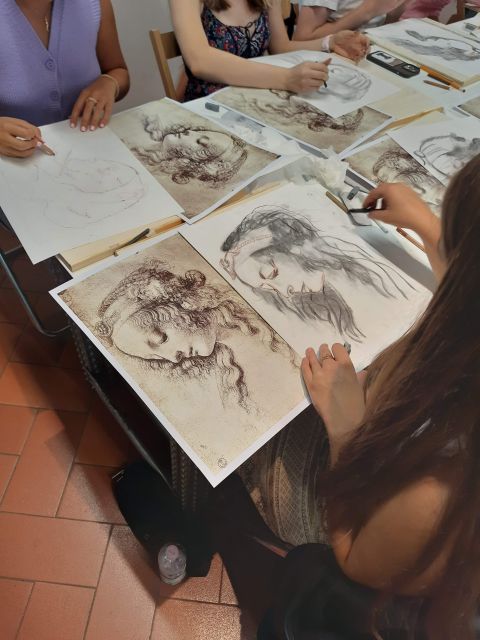
Pencil lines in Florence feel surprisingly practical. This 3-hour studio lesson teaches you Leonardo-style drawing step by step, using sanguine and charcoal to recreate a famous Renaissance sketch. I especially liked how the instructors translate big ideas into small, do-this-next marks, and I loved getting hands-on with the tools instead of just watching from the sidelines.
One thing to plan for: you are not touring monuments. You’ll be working indoors in a studio, and it’s a bit off the center—expect an easy walk (around 32 minutes, if you’re starting downtown), and you’ll want comfortable shoes.
In This Review
- Quick takes
- Leonardo Drawings at Geko Art Studio: what the 3-hour session is like
- The tools: sanguine, sepia, charcoal (and why it matters for beginners)
- Recreating a famous Leonardo sketch: the lesson flow
- Renaissance context without the heavy lecture
- Coffee break, private-group pacing, and how to get the most from it
- Location and timing: finding Geko Art Studio without stress
- Price and value check: what you get for $182 per person
- Who should book Leonardo Drawings (and who might skip it)
- Should you book Leonardo Drawings in Florence?
- FAQ
- How long is Florence: Leonardo Drawings?
- Where do I meet for the class?
- What materials are included?
- Do I need drawing experience?
- What kind of sketch will I work on?
- What languages are available for instruction?
- Is the group private?
- Are there set class times?
- What’s the cancellation policy and refund timing?
Quick takes
- Leonardo methods, not vague art talk: you follow the drawing process step by step with guidance.
- Real period materials: sanguine, sepia tones, and charcoal, plus the right erasers and paper setup.
- You recreate one famous sketch: you work from start to finish on a specific drawing.
- Private group feel: even when you’re new, the class is paced so you can keep up.
- Studio comforts included: coffee break with cookies, plus water and juice.
- Languages covered: English, Italian, and Spanish instruction.
Leonardo Drawings at Geko Art Studio: what the 3-hour session is like
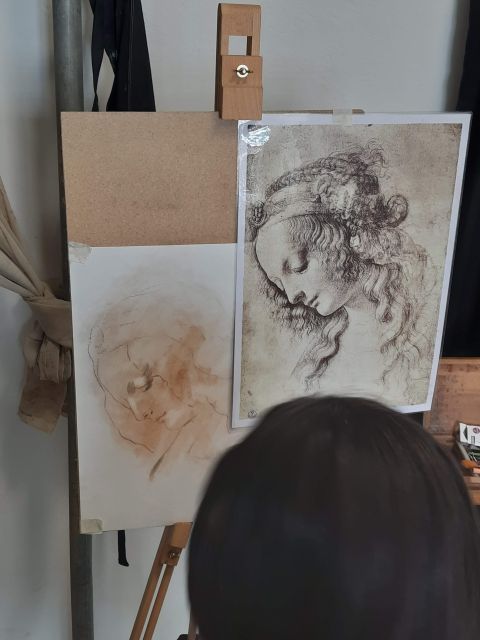
If you’ve ever looked at Leonardo da Vinci drawings and thought, I get the vibe, but I don’t know the technique, this is the fix. The whole class is structured like a studio apprenticeship: you start with materials, you map the sketch, and you build tone and shadow in the same kind of progression you see in his work.
The length matters. Three hours is long enough to do more than a quick demo. You’ll actually get to the stage where the drawing looks like it’s coming together, not just like you practiced one small skill. That showed up in the tone of the feedback I saw—people reported the experience as both relaxing and exciting, even if they hadn’t drawn in years.
You also get context along the way. Teachers share cultural and Renaissance background, plus practical information about how Leonardo approached drawing. It’s not a history-only lecture. It’s used to explain choices: why a mark goes here, why a tone is lighter, why charcoal behaves differently than other media.
You can also read our reviews of more tours and experiences in Florence.
- Tuscany Day Trip from Florence: Siena, San Gimignano, Pisa and Lunch at a Winery
★ 5.0 · 21,634 reviews

The tools: sanguine, sepia, charcoal (and why it matters for beginners)
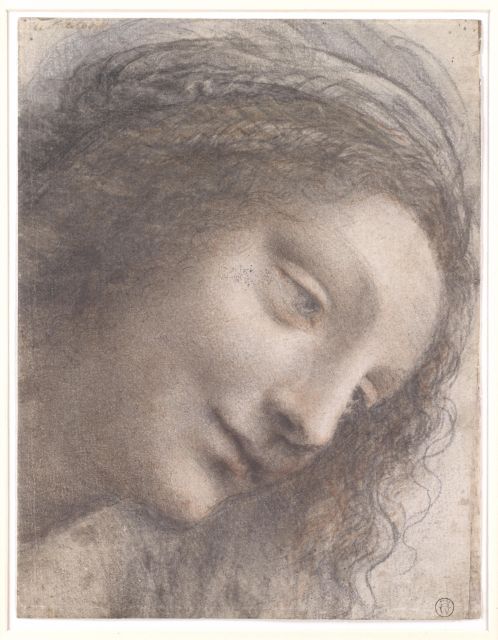
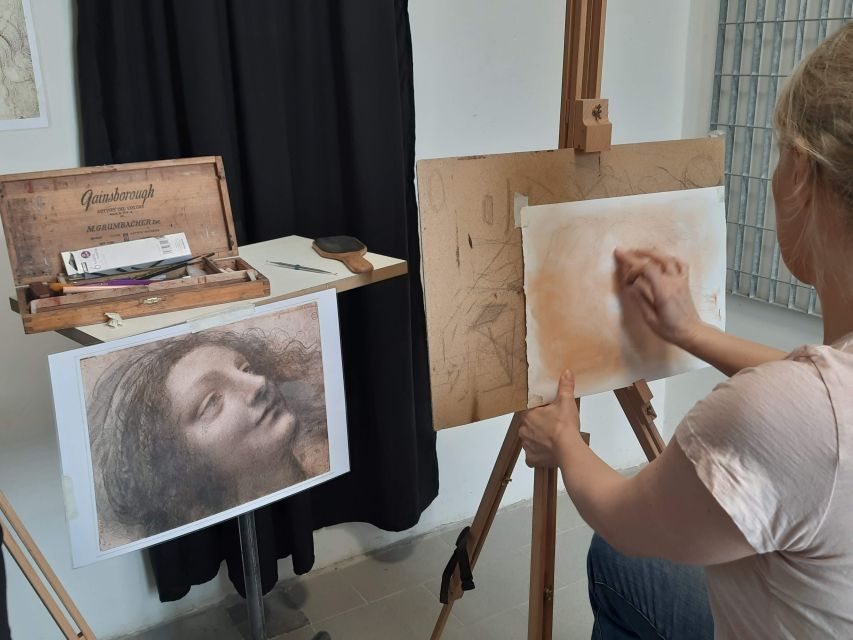
This workshop uses sanguine, sepia, and charcoal on paper. The key is that you’re learning how each material behaves, not just how to hold a pencil. Charcoal, for example, typically gives you deep, soft darkness and blends well, which is great for showing form quickly. Sanguine and sepia tones help you work in mid-range values and plan the drawing before you commit to the darkest parts.
What makes this valuable for first-timers is that the class doesn’t assume you already know the differences. You’re provided with everything you need: paper support, an easel setup, pencils/tools, eraser, and the right drawing materials for the sketch. If you’re worried about showing up with zero supplies, that worry goes away fast.
Also, the lesson is step by step. That means you can focus on learning the technique instead of wrestling with logistics. One person who wasn’t an experienced artist said the instructor was super nice and guided them through the process, and another noted they worked charcoal and came away feeling they could draw again after a long break. That’s exactly what you want from a short, focused class: a sense of control by the end, not just a cool souvenir.
Recreating a famous Leonardo sketch: the lesson flow
At the start, you’ll follow a traditional drawing process from the beginning through to a completed version of a well-known Leonardo sketch. You won’t be asked to freestyle. Instead, you reproduce a specific drawing while learning the method behind it.
Here’s the practical logic of the class flow as you’ll experience it:
- Step one is structure: you set up the major lines so the proportions and placement feel right.
- Then you build value: you use the materials to lay down tone gradually rather than going straight to the darkest areas.
- You adjust along the way: as your drawing takes shape, you refine edges and deepen shadows.
That gradual approach is where the instruction really pays off. Leonardo-style sketches can look casual at first glance, but the effect comes from careful staging—lighter work first, then stronger contrasts later. When teachers explain those choices during your session, you stop guessing and start making confident marks.
The class is also suitable for all skill levels. You don’t need previous drawing experience. In practice, that matters because beginners won’t be left behind with a blank page. Intermediate and more advanced students tend to benefit from the methodical pacing too, since they can compare their instincts to the traditional process the instructor is teaching.
Renaissance context without the heavy lecture
This lesson gives historical and cultural information about the Renaissance period and Leonardo’s life, but it’s woven into what you’re doing. You’ll learn about his artistic approach and the materials used in his sketching, which helps you see the drawing as a designed process, not just an artwork you admire.
The tone from the feedback I read was consistent: the teachers were experienced, supportive, and positive, and their passion made it easier to keep going when learning a new medium feels awkward. One comment even highlighted that the instructors made people feel at home and comfortable, which is a big deal in hands-on classes—confidence changes what you’re willing to try with your own charcoal.
If you’re the type who loves art but gets bored by lectures, you’ll probably enjoy how the context stays practical. You’re not sitting for long stretches listening. You’re drawing, then hearing just enough background to make your next move make sense.
Coffee break, private-group pacing, and how to get the most from it
This is a private group experience, and that can matter more than people expect. With smaller group energy, the instructor can give more focused attention and adapt the pace if you’re struggling with a step.
It also means you might get a very personal experience. One person noted the class was just them, with an instructor (and another team member) guiding them the whole time. Even if your group isn’t that small, you should still expect a calmer rhythm than a large group workshop.
Then there’s the simple, smart bonus: a coffee break with cookies, water, and juice. It keeps the energy up without turning the middle of class into a long pause. Art class can be physical in a quiet way—your hand and focus work for hours—so having a mid-session reset helps.
How to maximize the experience:
- Ask when you’re stuck, early. The biggest difference between good and great learning is whether you correct at the first confusion.
- Slow down on the early steps. The best drawings usually come from clean structure more than from dramatic shading.
- The Best tour in Florence: Renaissance & Medici Tales – guided by a STORYTELLER
★ 5.0 · 12,316 reviews



Location and timing: finding Geko Art Studio without stress
You’ll meet at the glass door of Geko Art Studio. It’s in Florence, but the studio is described as a bit outside the main center, so plan a comfortable walking plan or give yourself extra buffer time if you’re combining it with other sightseeing.
Time slots are coordinated personally. After booking, you’ll be contacted by WhatsApp or email as your date nears, and you can normally choose these windows: 10 am–1 pm, 2 pm–5 pm, and sometimes 5:30 pm–8:30 pm. If you’re trying to line it up with a tight Florence schedule, send a message early so you don’t end up scrambling.
What to bring beyond a good attitude:
- Comfortable shoes for the walk to the studio.
- A plan for what you’ll do afterward, since you’ll likely want to look at your completed sketch without rushing to your next reservation.
Price and value check: what you get for $182 per person
At $182 per person for a 3-hour lesson, this isn’t a cheap activity. But it also isn’t just a casual craft session. You’re paying for structured, guided drawing instruction with classic materials, in a private-group format, plus all supplies.
Here’s the value breakdown:
- Materials included: easel, paper, the specific pencils/tools, eraser, and the drawing materials for sanguine/sepia/charcoal.
- Instruction included: teachers guide you step by step through the sketch process.
- A snack break included: cookies, water, and juice.
- Bilingual/multilingual instruction: English, Italian, or Spanish.
What’s not included: transport to/from the atelier and shipping costs (if you ever need items sent). If you’re traveling in a way where you can walk or use a short ride, the total cost stays reasonable compared to classes where you must buy materials separately.
To judge whether it’s worth it for you, ask one question: do you want to leave with a finished drawing and actual technique, or do you just want to watch? If you want the hands-on skills, $182 makes more sense.
Who should book Leonardo Drawings (and who might skip it)
This workshop is a great fit if:
- You love art and want to learn how drawings are constructed, not just admired.
- You’re a beginner who wants clear steps and feedback.
- You’re returning to drawing after time away and need a confidence boost.
- You prefer a smaller, calmer activity where an instructor can keep you moving.
It might be less ideal if:
- You only want sightseeing and don’t like studio time.
- You’re hoping for a broad day tour with multiple locations.
- You’re traveling with strict time constraints and don’t want to coordinate a 3-hour block.
If you’re on the fence, think about your Florence style. If you’re the type who already plans museum time, you’ll probably enjoy this. It’s one of the more creative ways to connect with the city beyond paintings on walls.
Should you book Leonardo Drawings in Florence?
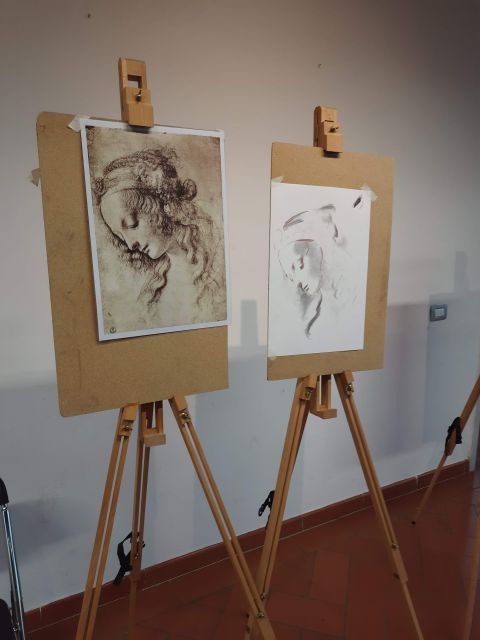
Yes, if you want a hands-on Leonardo experience that teaches technique you can reuse. The class is built around step-by-step drawing with classic materials, and you’re not required to have prior skill. The private-group feel and supportive instruction are a strong combo, especially if you learn better with coaching while your hand is moving.
If you’re mainly chasing outdoor sights or you hate the idea of being indoors for a few hours, then it may feel too workshop-like. But if you’re open to getting your hands dirty with charcoal, this is a smart, memorable way to spend time in Tuscany’s art capital.
FAQ
How long is Florence: Leonardo Drawings?
The experience lasts 3 hours.
Where do I meet for the class?
You meet at the glass door of Geko Art Studio.
What materials are included?
You’ll get drawing materials, including an easel, paper support, pencil, sanguine pencil, charcoal, and an eraser, plus coffee break items.
Do I need drawing experience?
No. It’s suitable for all skill levels, and teachers guide you step by step.
What kind of sketch will I work on?
You’ll reproduce one of Leonardo da Vinci’s famous sketches using traditional techniques.
What languages are available for instruction?
Instruction is available in English, Italian, and Spanish.
Is the group private?
Yes, it’s a private group.
Are there set class times?
Time slots are coordinated personally with the office, and you can normally choose 10 am–1 pm or 2 pm–5 pm, and sometimes 5:30 pm–8:30 pm.
What’s the cancellation policy and refund timing?
You can cancel up to 24 hours in advance for a full refund.
You Might Also Enjoy


More Tour Reviews in Florence
- Tuscany Day Trip from Florence: Siena, San Gimignano, Pisa and Lunch at a Winery
★ 5.0 · 21,634 reviews - The Best tour in Florence: Renaissance & Medici Tales – guided by a STORYTELLER
★ 5.0 · 12,316 reviews