REVIEW · FLORENCE
Florence City Tour & David
Book on Viator →Operated by Tuscan Tour Guide - Tours · Bookable on Viator
David plus Medici streets in one smart walk. This small-group tour strings together the Galleria dell’Accademia and the Medici power centers, then ends at Ponte Vecchio with clear, street-level Renaissance context.
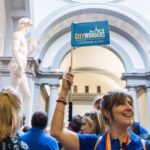
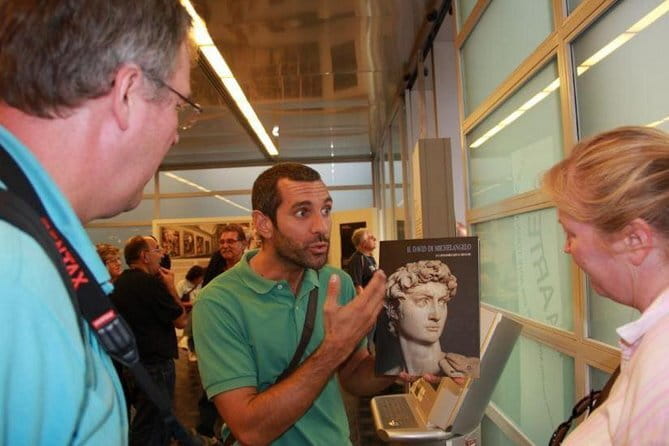
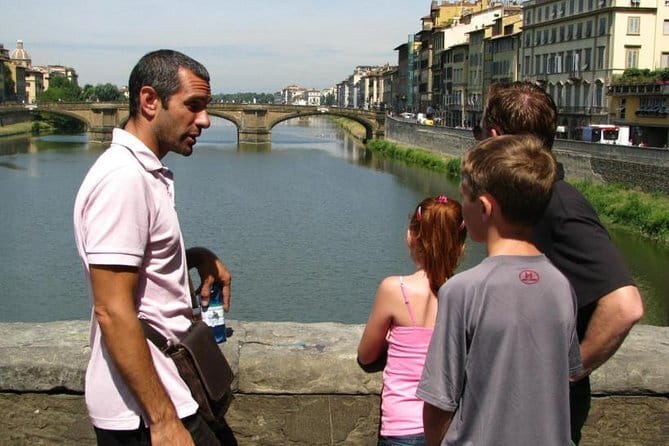
I especially like the small group size (max 11–12), because it keeps things conversational instead of rushed. And the guide, Paul Costa, brings an animated, teacher-style approach that helps even art topics feel trackable.
One possible drawback: the experience is non-refundable, so be sure your plans are locked. Also, it starts in the morning at 9:10am, so you’ll want to be prompt.
In This Review
- Key highlights worth planning for
- How Accademia Tickets Shape Your Florence Morning
- Palazzo Medici Riccardi Courtyard: A Medici Power Lesson Without the Fluff
- Florence Cathedral Area and the Baptistery Story: Doors of Paradise and Baptism Changes
- Piazza della Signoria: Standing Where Michelangelo’s David First Shone
- Vasari’s Private Hallway and Cosimo de’ Medici’s City Control
- Ponte Vecchio: How a Bridge Survived 1333 to WWII
- Price and time: Is $464.43 for 3 hours worth it?
- Getting the most out of Paul Costa’s style (and staying comfortable)
- Who this Florence and David tour is best for
- Should you book Florence City Tour & David?
- FAQ
- How long is the Florence City Tour & David?
- Where does the tour start and end?
- What time does the tour begin?
- Is this a small-group tour?
- Is skip-the-line admission included?
- What will I see at the end of the tour?
- Are there any stops with free admission?
- When will I get confirmation after booking?
- What is the cancellation policy?
Key highlights worth planning for
- Skip-the-line entry to Galleria dell’Accademia to get time back on your schedule
- Michelangelo’s David plus the original placement in Piazza della Signoria so you see the story in two locations
- Medici courtyard time at Palazzo Medici Riccardi with Roman-Greek-Renaissance art and architecture in one view
- Cathedral and baptistery focus including the Doors of Paradise and changes to baptism in the 1300s
- Ponte Vecchio’s survival story from 1333 to WWII with Axis and Allies history tied in
How Accademia Tickets Shape Your Florence Morning
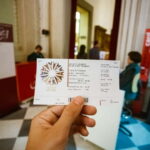
The tour starts at Via Ricasoli, 58 (right near where you’ll find your way to Ponte Vecchio later), with a 9:10am start. Meeting early matters in Florence, because the big sights around the center fill up fast. This is also why the skip-the-line part is a big deal: you’re not donating your morning to a queue.
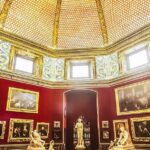
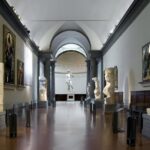
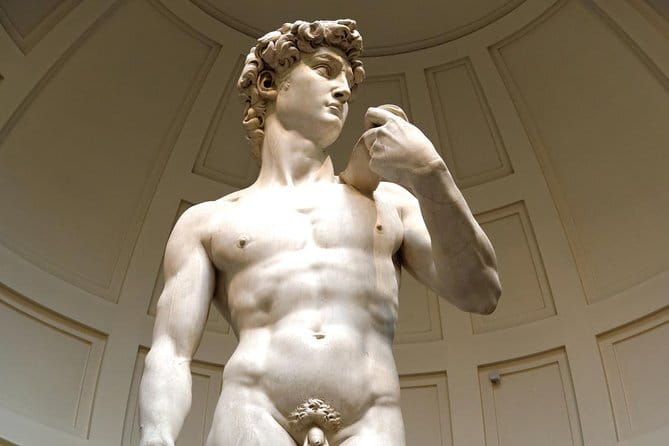
At the Galleria dell’Accademia, you’ll spend about an hour with the star of the show, Michelangelo’s David. The guide doesn’t treat the statue like a selfie stop. Instead, you’ll learn how the statue and other works were interpreted by the public more than 500 years ago, which changes how you look at it. You stop asking only what it looks like, and start asking why it mattered.
If you’re worried about “Is David going to be worth it?”—this is the right kind of tour for that doubt. It connects David to Renaissance ambition and to the Medici world that shaped Florence’s cultural priorities. That’s a lot to pack into one museum hour, and the pace here feels designed for real learning, not museum fatigue.
You can also read our reviews of more city tours in Florence
Palazzo Medici Riccardi Courtyard: A Medici Power Lesson Without the Fluff
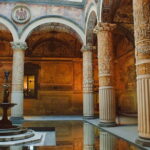
After the Accademia, the tour moves to Palazzo Medici Riccardi, where you’ll visit the inner courtyard. You’ll have about 15 minutes there, and admission is free. Even in a short slot, the courtyard is a strong setting because it shows how the Medici presented themselves: wealthy, connected, and obsessed with image.
This stop is built around a specific idea: Roman, Greek, and Renaissance architecture and art colliding in one place for one selfish reason—the Medici ego. That framing is useful. It helps you read the visual language of power as you walk past later buildings. It also explains why Florence’s Renaissance wasn’t just about painters; it was about patrons using art to shape politics and reputation.
The courtyard setting also makes the storytelling easier. You can look up, scan details, and connect them to what the guide is saying, instead of just listening while walking through a corridor.
Florence Cathedral Area and the Baptistery Story: Doors of Paradise and Baptism Changes
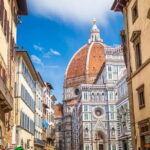
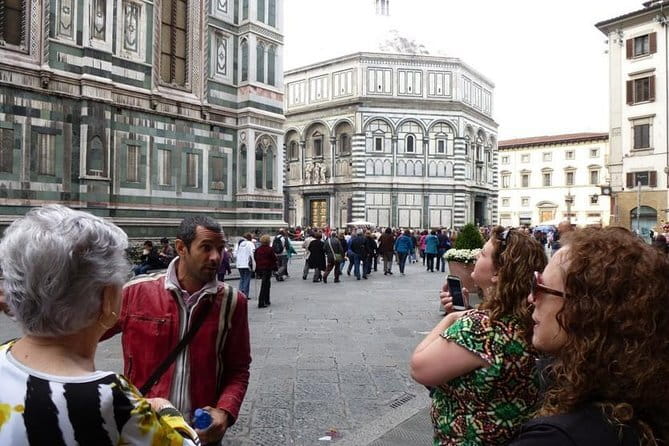
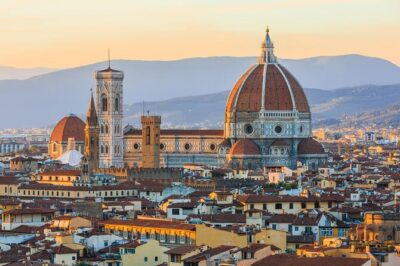
Between Medici stops and the square, the tour shifts into the religious and civic core. You’ll learn how the biggest church and dome building project in Florence took shape across the 1300s and 1400s. This part is short, but it gives you the right framework: major architecture projects weren’t just engineering. They were identity statements for a city.
Then comes another focused moment: the building connected to baptisms, why baptism was changed in the 1300s, and the meaning of the structure’s shape. You’ll also hear about the Doors of Paradise, which the tour highlights as a key element of Florence’s spiritual and artistic identity.
Even if you’ve seen cathedral exteriors before, this is the stop that turns “pretty building” into “why this town cared so much.” You start noticing how Florence used ritual, art, and public ceremony to reinforce social order. That makes the later stops—where civic power and patronage overlap—click into place.
If you’re the type who likes context, this is one of the best uses of a short walking tour. It keeps the tour from becoming only a list of famous names.
Piazza della Signoria: Standing Where Michelangelo’s David First Shone
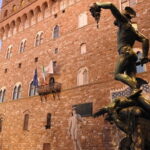
Next up is Piazza della Signoria, with about 15 minutes there. Admission is free, and the payoff is the connection between David in the museum and David in the public square.
Here’s the clever part: you’ll see where Michelangelo placed the original David. That location matters because the statue’s message changes when you put it in a political and public space instead of behind museum glass. In the piazza, David reads like civic strength—an image meant for the city to see, debate, and use.
You’ll also see other statues associated with the Medici additions around the square. Then there’s Palazzo Vecchio, which has been on the site since 1299 and still functions as City Hall and political space today. Even without going inside, the building’s role helps you understand why Florence treated art like public messaging.
This stop is also one you can enjoy even if you’re not an art history superfan. The guide’s explanations tend to connect art choices back to who had the authority to commission them, and why.
Vasari’s Private Hallway and Cosimo de’ Medici’s City Control
From Piazza della Signoria, you’ll get a story that makes Florence feel like a chessboard. You’ll learn about a private hallway built by Vasari for Cosimo de’ Medici, designed so he could cross parts of the city without going outside.
That single detail does a lot of work. It shows how Medici power wasn’t only in palaces and churches. It was in movement, access, and control over who could see what—plus the practical idea that elites didn’t want to be exposed to the street.
This is the kind of information that makes later wandering more enjoyable. When you walk past streets and windows on your own, you start imagining sight lines and routes. It turns Florence into a place you understand, not just one you cross off.
- The Best tour in Florence: Renaissance & Medici Tales – guided by a STORYTELLER
★ 5.0 · 12,316 reviews

Ponte Vecchio: How a Bridge Survived 1333 to WWII
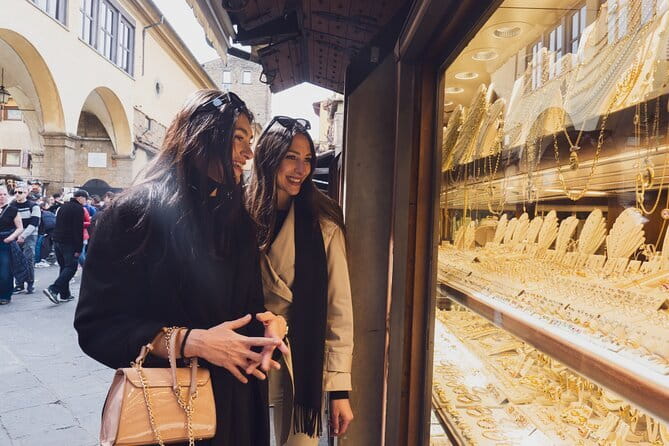
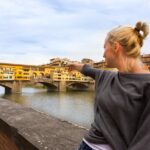
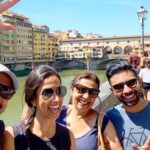
The tour ends at Ponte Vecchio, with about 10 minutes there and no admission fee. This is a great finish because it’s a view people remember: the Arno crossing that feels both old and stubborn.
You’ll learn why this bridge has lasted since 1333 to today. Then the guide brings in a WWII story: how Renaissance art and the actions of the Axis and Allies helped the bridge survive.
It’s an unusual mix—art and wartime politics—but that’s the point. Florence’s Renaissance didn’t stop at fancy costumes and sculpture. The city’s art and symbolism affected decisions in later centuries too. By the time you reach Ponte Vecchio, you’re seeing the long arc: Florence protects what it values, even under pressure.
Price and time: Is $464.43 for 3 hours worth it?
The price is $464.43 per person for about 3 hours. That’s not cheap for a walking tour, so you should ask what you’re really buying.
You’re paying for three main things:
- Skip-the-line admission to the Galleria dell’Accademia, plus the included admission ticket for that museum stop
- A guide who frames Renaissance and Medici influence in a way you can carry to the rest of your trip
- A small group size (max 11–12), which helps you get answers instead of just listening to talking while standing shoulder-to-shoulder
Also, the structure matters. Several stops have free entry, but the Accademia component is the one place where your time can get lost if you show up unprepared. If you’re short on days, the skip-the-line value alone can justify a higher tour price.
Where it might feel less worth it: if you already know all the basics of Michelangelo, the Medici, and Florence’s civic layout—and you’re mainly there for photo moments. In that case, you’d spend less money going at your own pace. But if you want Florence to make sense fast, the guide-led structure is the value.
Getting the most out of Paul Costa’s style (and staying comfortable)
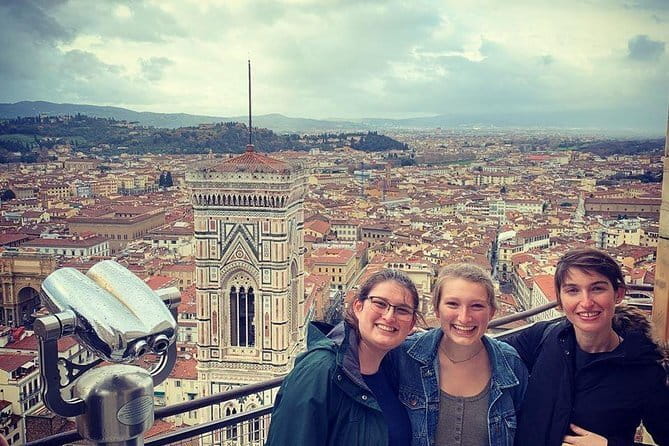
The reviews and overall reputation for this tour point to a guide—Paul Costa—who keeps people engaged with a lively, teacher-like delivery. The big practical benefit is clarity: he explains in a way that helps you follow along even if you’re not an art-history nerd.
That style matters with a tour like this because it moves through multiple “themes” quickly: Renaissance art, Medici power, civic politics, and WWII survival history. When the guide connects those dots clearly, your brain doesn’t feel scattered.
A couple of practical tips for your end:
- Wear comfortable shoes. This is a city-walk tour with multiple concentrated stops.
- Bring a phone charger or backup battery if you rely on photos for later memory.
- If something confuses you—ask. This kind of guide approach usually makes Q&A natural, not awkward.
Who this Florence and David tour is best for
This tour fits best if you want a fast, organized way to understand Florence through one big thread: how the Renaissance and the Medici family shaped what you see.
You’ll be especially happy if:
- You want David plus the story behind him, not just the statue
- You like learning why buildings and artworks were commissioned and used as messaging
- Your group includes mixed interests, like art lovers plus people who just want good Florence context
It’s also a solid choice if you’re traveling with multiple ages. The tour structure and small group size tend to work well when attention spans vary—because the guide’s delivery keeps shifting to new ideas and visuals.
Should you book Florence City Tour & David?
Book this tour if you want your first (or only) Florence art-hit to come with context and a clear Medici-to–street-level storyline. The skip-the-line David start, the original placement stop in Piazza della Signoria, and the Ponte Vecchio finale make it feel like more than a standard highlights walk.
Skip it (or consider something else) if your schedule can handle museum lines and you mainly want free-choice wandering. The price is high enough that you’ll want to be sure you’ll use the guide time well.
FAQ
How long is the Florence City Tour & David?
It’s about 3 hours.
Where does the tour start and end?
It starts at Via Ricasoli, 58, 50122 Firenze FI, Italy and ends at Ponte Vecchio, 50125 Firenze FI, Italy.
What time does the tour begin?
The start time listed is 9:10am.
Is this a small-group tour?
Yes. It has a maximum of 12 travelers, and it’s described as a maximum of 11 guests for the intimate small-group experience.
Is skip-the-line admission included?
Yes. Skip-the-line admission is included for the Galleria dell’Accademia, and an admission ticket is included for that stop.
What will I see at the end of the tour?
You’ll finish at Ponte Vecchio, with a story about why the bridge has lasted since 1333 and how WWII history connects to its survival.
Are there any stops with free admission?
Yes. The Palazzo Medici Riccardi courtyard stop is listed as free, and the Piazza della Signoria and Palazzo Vecchio area, plus Ponte Vecchio, are also listed as free in the provided details.
When will I get confirmation after booking?
Confirmation is received within 48 hours of booking, subject to availability.
What is the cancellation policy?
This experience is non-refundable and cannot be changed for any reason. If it’s canceled because the minimum number of travelers isn’t met, you’ll be offered a different date/experience or a full refund.
You Might Also Enjoy
More City Tours in Florence
More Tours in Florence
- The Best tour in Florence: Renaissance & Medici Tales – guided by a STORYTELLER
★ 5.0 · 12,316 reviews

More Tour Reviews in Florence
- Tuscany Day Trip from Florence: Siena, San Gimignano, Pisa and Lunch at a Winery
★ 5.0 · 21,634 reviews - The Best tour in Florence: Renaissance & Medici Tales – guided by a STORYTELLER
★ 5.0 · 12,316 reviews