Boboli is basically Florence’s art decoder ring. This 1.5-hour guided walk through the Medici gardens shows how sculptures, fountains, and even plant layouts can carry messages across centuries. I love how the tour connects the garden’s details to big myths, from classical heroes to later artists, and I especially love the panoramic view you earn at the top.
What really makes this feel worth it is the way you see Boboli and Pitti Palace as one story. You’ll also get skip-the-line entrance, so you spend your time walking, not waiting. And you’ll likely hear explanations from guides such as Guido, Ivano, or Alessandra, who know how to point out the stuff most people miss.
One consideration: with only 1.5 hours, you need comfortable shoes and a flexible pace. If you want a long, unhurried stroll to every corner, this may feel a bit fast.
In This Review
- Key things that make this tour click
- First steps at Pitti Palace: where the garden story starts
- The Medici “garden logic”: why Boboli is more than pretty
- Sculptures and fountains: your “myth map” as you walk
- Hercules, Demeter, and the others
- Fountains of artichoke and Neptune
- Grottoes and terraces: why you keep changing viewpoint
- Secret Garden moments and the Tunnel of Love
- The panoramic Florence view: why the top is worth it
- Price and value: is $93 per person fair?
- Practical tips so you’ll enjoy every minute
- Who this tour is best for (and who should think twice)
- Guides can make or break Boboli—what to expect from the tour style
- Should you book this Boboli Medici Gardens and hidden messages tour?
- FAQ
- How long is the Boboli The Medici Gardens & Hidden Messages tour?
- Where do I meet for the tour?
- What’s included in the price?
- Is Palatine Gallery or other museum time included?
- What languages are available?
- Do I need comfortable shoes?
- What should I bring?
- What is not allowed during the tour?
- Is free cancellation available?
Key things that make this tour click
- Hidden messages in plain sight: statues, fountains, and garden design tied to gods and heroes
- You’ll see major Boboli spots fast without hunting for the meaning on your own
- Fountains with personalities: artichoke and Neptune show up in the story the guide tells
- Myth characters you can actually picture: Hercules, Demeter, and even Spartan king Tyndareus
- Romantic and quirky moments: secret garden spots and the Tunnel of Love
- A real payoff view over Florence when you reach the top areas of the gardens
First steps at Pitti Palace: where the garden story starts
Meet at the main entrance to Pitti Palace. That matters more than it sounds. Boboli doesn’t feel like a random park you wandered into. It feels like a designed world attached to Medici power and taste. Starting from Pitti helps you connect the palace life to the garden life—formal, planned, and full of meaning.
Once the tour begins, the tone changes from Florence sightseeing mode to Florence interpretation mode. The guide isn’t just pointing at plants and stonework. They’re walking you through how artists used myth to communicate ideas—about virtue, rule, protection, and even who should be remembered.
And yes, you are literally walking. But it’s a walking tour where the path is half the lesson. The garden’s layout helps you understand why certain sculptures or grotto-like spaces exist where they do.
You can also read our reviews of more tours and experiences in Florence.
- Tuscany Day Trip from Florence: Siena, San Gimignano, Pisa and Lunch at a Winery
★ 5.0 · 21,634 reviews


The Medici “garden logic”: why Boboli is more than pretty
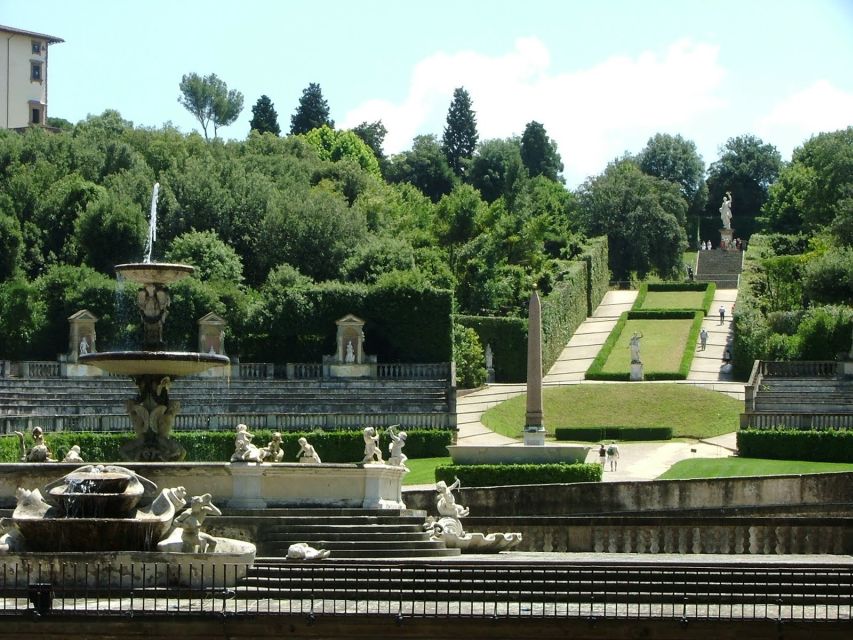
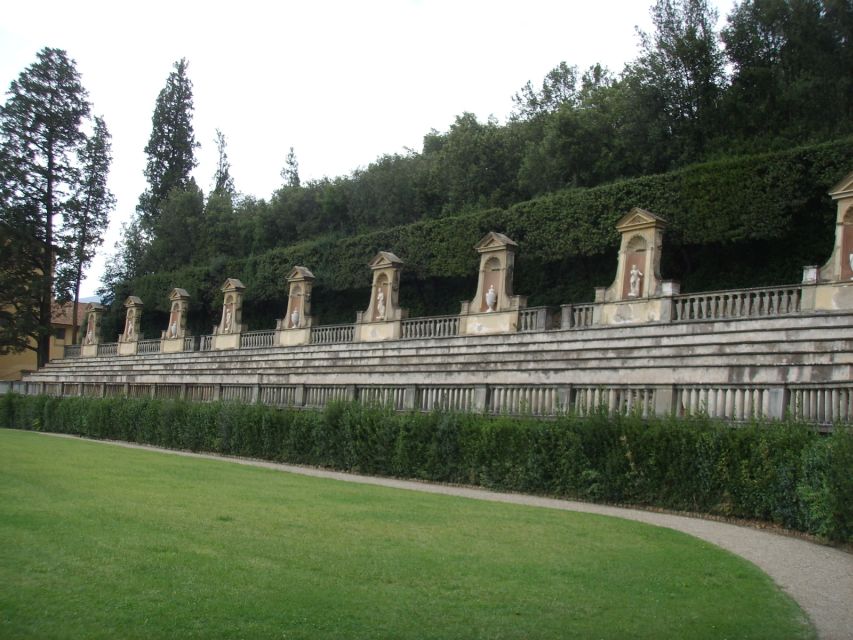
Cosimo I de Medici designed these gardens in 1562. The whole project aimed to make Boboli a model for European royal gardens later on. That’s a big claim, but you can feel it in the structure: terraces, dramatic sightlines, fountain moments, and “green architecture” that acts like building design, only made of trees, hedges, and landscaping.
Here’s what I like about the way this tour frames Boboli. It doesn’t treat the garden as a museum with labels. It treats it like a message system. In Boboli, artists placed works of art—sculptures and fountain scenes—with allegories you can miss completely if you just look like a casual tourist.
The tour’s promise of hidden messages is real, and you’ll notice it as soon as the guide starts connecting what you see to the stories behind it. For example, the tour spotlights myth figures you can recognize at a glance—like Hercules and Demeter—but also characters that are more obscure, like the Spartan king Tyndareus. That mix keeps the garden from becoming a single-theme lecture.
If you like history that has details you can see, this works. If you want only atmosphere, you can still enjoy it—but you may not get as much out of the symbolism.
Sculptures and fountains: your “myth map” as you walk
Boboli’s statues and water features are not just decoration. They’re part of the garden’s visual storytelling. On this tour, you’ll see important highlights across the grounds, plus the guide will explain how the themes link together.
Hercules, Demeter, and the others
When the guide talks about Hercules, you’re not just admiring a strong figure. You’re hearing why strength, heroism, and moral lessons show up in garden art. With Demeter, the conversation usually shifts toward renewal, agriculture, and the idea of nature as something shaped and controlled.
And then there’s Tyndareus, a reminder that the garden’s myth references aren’t limited to the usual names everyone knows from basic Greek stories. That’s where a guide helps a lot. You might spot a sculpture, but you probably won’t name the reference or understand the point without help.
Fountains of artichoke and Neptune
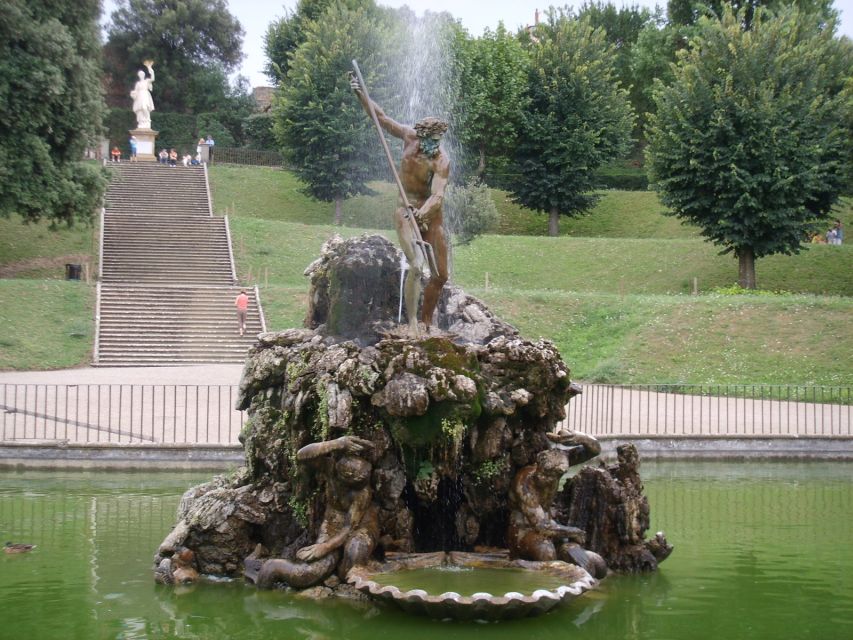
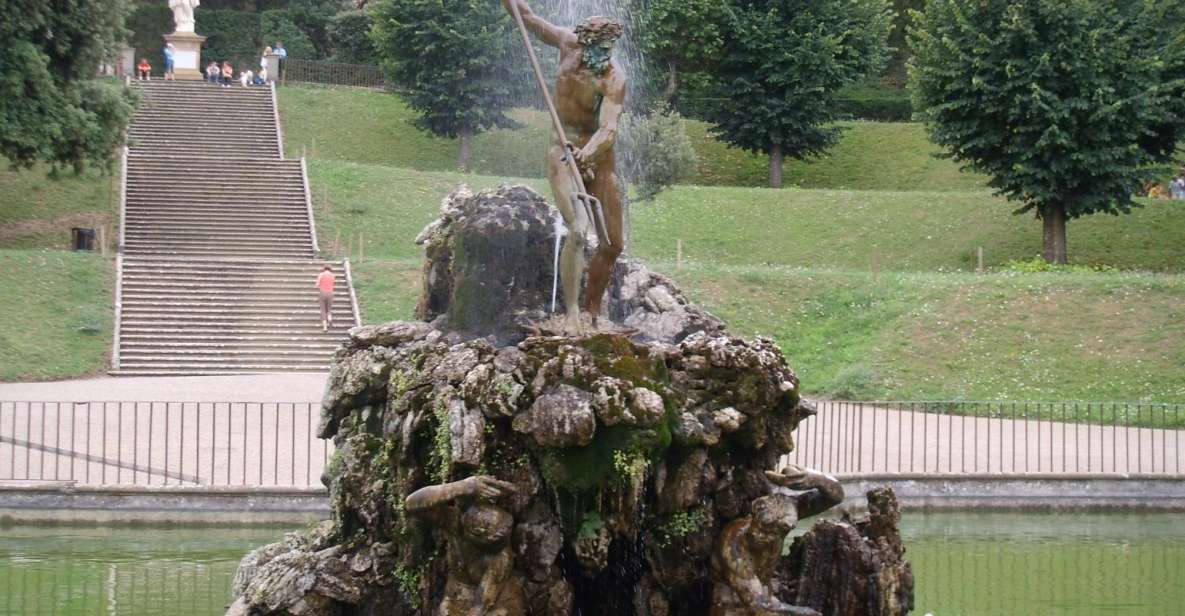
Two fountain highlights are called out in this experience: the Fountain of the Artichoke and the Fountain of Neptune. Even if you don’t remember the mythology afterward, you’ll remember the sensation of water and scale in a garden setting. Water makes the garden feel alive, and in Boboli that life is arranged.
Neptune is a perfect example of how a fountain can signal theme. Water implies sea, power, and control. The guide uses that symbolism to connect the garden design to Medici ideas about authority and order.
The artichoke fountain adds another flavor. It’s playful, and it also shows that this wasn’t a garden that took itself too seriously. Allegory can be clever.
- The Best tour in Florence: Renaissance & Medici Tales – guided by a STORYTELLER
★ 5.0 · 12,316 reviews






Grottoes and terraces: why you keep changing viewpoint
Expect grottoes, terraces, and shifting elevations as you move through the garden. These design choices are part of the storytelling. Each change in viewpoint gives the guide a chance to point out an artwork in context—what you would have missed if you were just strolling.
Terraces also set you up for the final reward: the panoramic part at the top. You’ll be walking through “garden stages,” and the view becomes the payoff for the work.
Secret Garden moments and the Tunnel of Love
This tour includes stops that feel more personal and romantic than formal. You’ll go to the Secret Garden and the Tunnel of Love. These spaces help the tour avoid becoming only myth and symbolism.
They also help you understand Boboli as a place designed for different moods. Medici gardens weren’t only about public spectacle. They were also about private strolling, controlled privacy, and carefully framed romance.
If you’re traveling with a partner, the Tunnel of Love is a natural photo spot. If you’re traveling with kids (the description explicitly points to kids as a good fit), these sections usually keep attention. It’s harder to zone out when you’re walking through a space that feels like a storybook.
The panoramic Florence view: why the top is worth it
At the top of the gardens, you’ll get a spectacular panoramic view of Florence. This is the part that turns “I’m seeing gardens” into “I’m getting Florence from above.”
In a 1.5-hour format, it’s smart that the tour ends with the view idea. It gives you a clear endpoint and makes the walking feel purposeful. You’ll also likely have an easier time photographing the city because the garden structures frame your angles.
Even if the day is cloudy, the height and the sightlines help. And on sunny days, the light makes the city and garden feel connected rather than separate.
Price and value: is $93 per person fair?
$93 per person for a 1.5-hour guided walking tour with skip-the-line entrance and an official local guide is a reasonable package in Florence terms, mainly because of what you get: interpretation plus time savings.
If you attempted this on your own, you could absolutely wander Boboli and enjoy it. But the whole point of this experience is the hidden meanings—allegories you’re told about as you walk. In places like this, a good guide often turns a nice visit into an “I actually understand what I’m looking at” visit.
So for me, the value isn’t just that you get access. It’s that the guide helps you read the garden like an artwork, not a backdrop.
Practical tips so you’ll enjoy every minute
A few things make a big difference here:
- Bring comfortable shoes. The tour is walking through garden terrain, and the ground can feel uneven.
- Avoid luggage or large bags, plus pets and smoking aren’t allowed.
- Have your passport or ID card with you.
Also, plan for a pace that matches a 1.5-hour guided format. If you stop to read every sculpture label you can find, you may feel rushed. Let the guide do the interpretation while you focus on looking.
Who this tour is best for (and who should think twice)
This experience fits you if you want more than photos. You’ll like it if you enjoy mythology, symbolism, and art that has a reason behind the placement. It’s also a great match if you’re someone who loves a strong viewpoint—because the panoramic finish is part of the deal.
It’s also listed as a good option for nature lovers, romantic types, and kids, mostly because it blends greenery, story moments, and playful garden spaces like the Tunnel of Love.
You might think twice if you hate walking tours, or if you want a long, slow botanical experience. This is designed for highlights and meaning in a short time.
Guides can make or break Boboli—what to expect from the tour style
One theme shows up again and again when it comes to tours like this: you really do need a guide to understand what you’re seeing. The explanations are what tie the gods and heroes to the sculptures and fountains. That’s why the official local guide piece is such a big part of the value.
In practice, guides like Guido and Ivano (and you may also meet someone like Alessandra) tend to focus on the most interesting and beautiful parts in a way that keeps things moving. You’re not waiting in one spot forever. You’re getting a sequence: see it, understand it, move on.
Should you book this Boboli Medici Gardens and hidden messages tour?
I’d book it if you’re in Florence for a short stay or you want a focused way to see Boboli and connect it to Medici art and myth. The 1.5-hour length is exactly right if you want highlights plus explanation, and the skip-the-line access helps keep the day from slipping.
I’d skip it if you’re looking for a long self-guided wander, or if you already know the mythology and symbolism well enough to enjoy Boboli without coaching.
If you’re on the fence, this is my simple rule: if you want to understand the garden’s code, book it. If you just want scenery and don’t care why the art is there, you’ll probably enjoy Boboli more on your own time.
FAQ
How long is the Boboli The Medici Gardens & Hidden Messages tour?
It lasts 1.5 hours.
Where do I meet for the tour?
The meeting point is the main entrance to Pitti Palace.
What’s included in the price?
You get entrance fees with skip-the-line tickets, an official local guide, and a walking tour.
Is Palatine Gallery or other museum time included?
No. Tickets to the Palatine Gallery or any other museum inside Pitti Palace are not included.
What languages are available?
The live tour guide is offered in English and Italian.
Do I need comfortable shoes?
Yes. Comfortable shoes are recommended, since you’ll be walking through the gardens.
What should I bring?
Bring your passport or ID card and wear comfortable shoes.
What is not allowed during the tour?
Pets, smoking, and luggage or large bags are not allowed.
Is free cancellation available?
Yes. You can cancel up to 24 hours in advance for a full refund.
You Might Also Enjoy



More Tour Reviews in Florence
- Tuscany Day Trip from Florence: Siena, San Gimignano, Pisa and Lunch at a Winery
★ 5.0 · 21,634 reviews - The Best tour in Florence: Renaissance & Medici Tales – guided by a STORYTELLER
★ 5.0 · 12,316 reviews