REVIEW · FLORENCE
Florence: Accademia Gallery Priority Entry Ticket
Book on GetYourGuide →Operated by Inside Out Italy · Bookable on GetYourGuide
Skip the line, then let marble do the talking. This priority-ticket setup strings together Florence’s biggest hits, with Michelangelo’s David, key Renaissance works, and an extra stop for music lovers.
I like the timed entry approach because it’s built to reduce the usual waiting-game around the top Florence museums. I also like that you’re not just doing paintings—there’s the Museum of Musical Instruments with a Stradivarius violin and an extremely old surviving piano.
The main catch is crowding: during peak times, the galleries can still feel busy, so it helps to pick an early or late entry slot if you’d rather not shuffle.
In This Review
- Key reasons this ticket works in Florence
- Ticket pickup at Via Camillo Cavour: don’t wing it
- Skip-the-line entry: what “express security” changes for you
- Michelangelo’s David: the 5-meter moment and what to notice
- Beyond David: the Gothic-to-Renaissance story you can actually follow
- Uffizi ticket value: Botticelli, da Vinci, and why it’s worth pairing
- Caravaggio and Medusa: dramatic story time, no extra effort
- Museum of Musical Instruments: Stradivarius violin and an old piano
- What rules actually affect your visit (photos, bags, and walking)
- Timing tips for a calmer day: early vs. late slots matter
- Breaks and small comfort wins: the terrace bar
- Price and value: what $41 covers and what you should compare
- Who this fits best (and when to skip it)
- Booking checklist: the stuff you must have ready
- Should you book this priority-entry ticket?
- FAQ
- How much is this ticket and how long is the experience?
- Where do I pick up my tickets?
- What’s included in the ticket price?
- Is a guided tour included?
- Are photos allowed?
- What ID do I need to enter?
Key reasons this ticket works in Florence
- Priority entry that cuts down line friction with an express security check
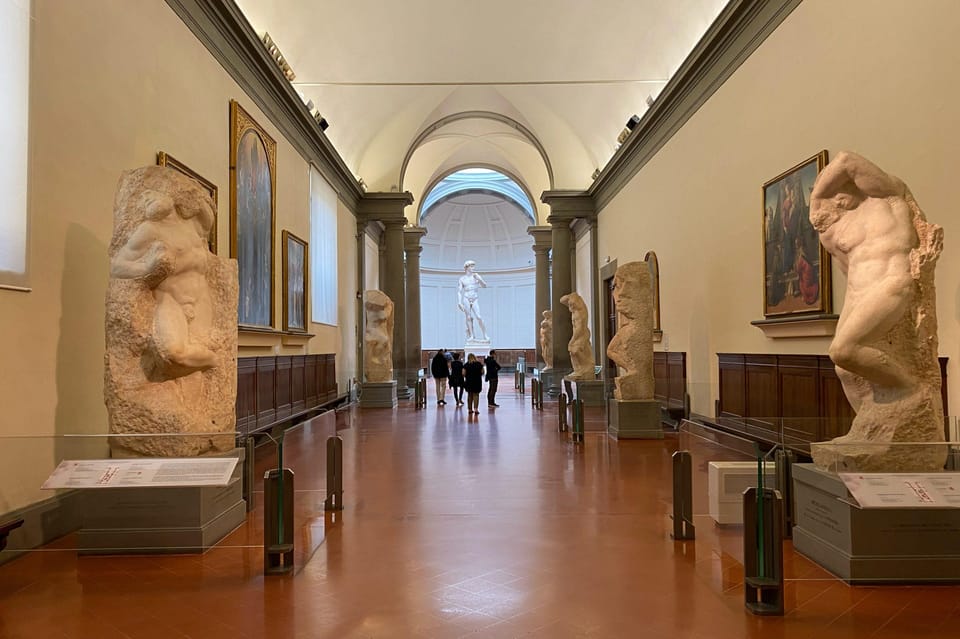
- Michelangelo’s David on a big scale and close enough to notice craft details
- A chronological art-history path moving from Byzantine through Gothic to Renaissance
- Uffizi highlights included like Botticelli’s Birth of Venus and Primavera
- Caravaggio and da Vinci major works appear in the same day plan
- Musical Instruments Museum adds a smart twist with a Stradivarius violin and the oldest surviving piano
Ticket pickup at Via Camillo Cavour: don’t wing it
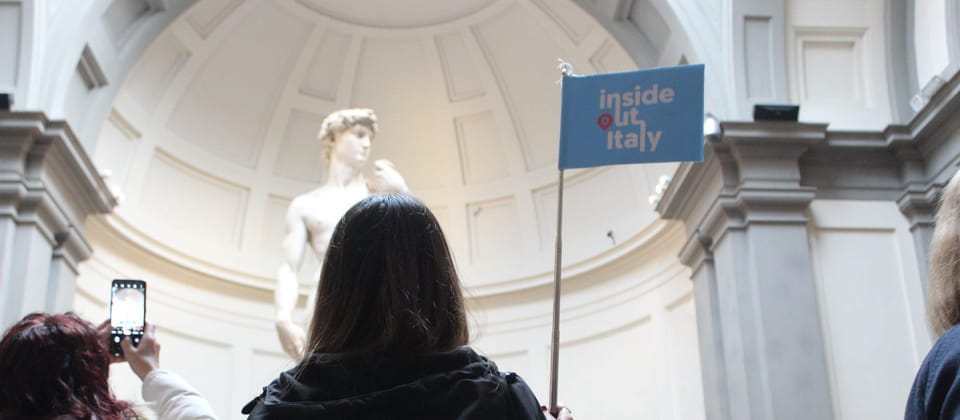
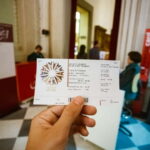
Your voucher isn’t the actual ticket. You first collect paper tickets at the tourist office in Via Camillo Cavour 19 in Florence, just a few steps from the Accademia area (about a 3-minute walk from the museum).
This matters because the whole experience is timed around entry. If you’re even a little off on timing, you can lose the benefit of priority, so I’d treat pickup as your warm-up, not an afterthought.
You can also read our reviews of more tours and experiences in Florence
Skip-the-line entry: what “express security” changes for you
This is a skip-the-line through express security check experience. In plain terms, you still go through security, but you do it through a faster lane, which helps you get to the galleries while your energy is high.
Because the galleries can be crowded, that small head start makes a difference. You’ll spend more time looking and less time standing, which is the real value of priority tickets in Florence.
Michelangelo’s David: the 5-meter moment and what to notice
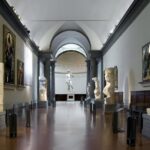
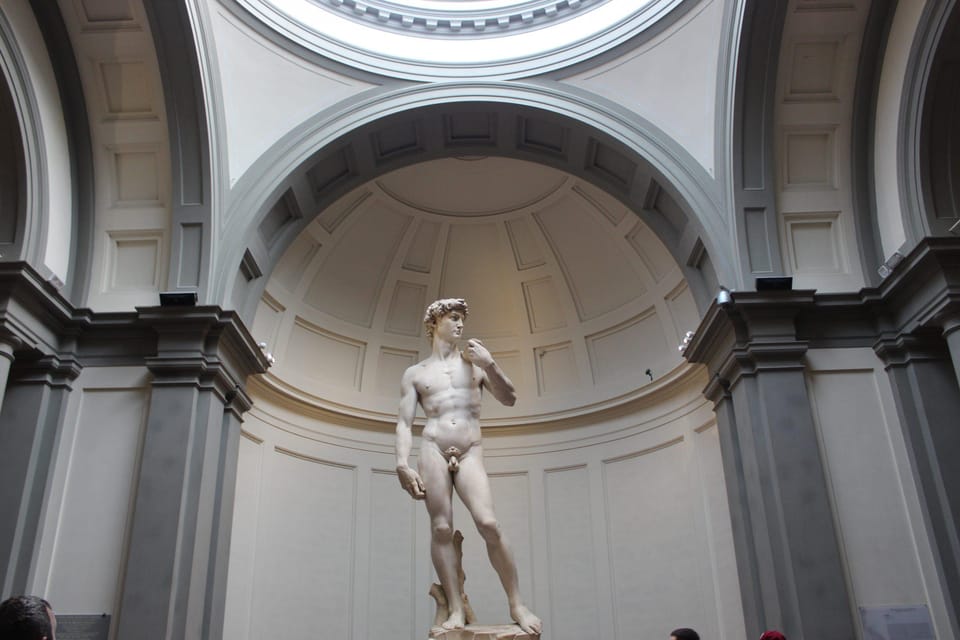
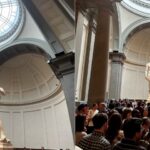
The star here is Michelangelo’s David, the famous 5-meter-tall marble statue. With your timed entry, you bypass the long wait and get straight into the viewing flow, which makes it easier to take your time with the details.
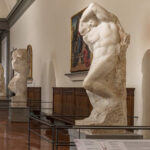
What I’d watch for is how the statue communicates tension and readiness. Even without a formal lecture, you’ll likely pick up how the facial expression and body posture work together—craft that feels less like decoration and more like a living moment frozen in stone.
If you like art that has both symbolism and physics (muscles, proportions, balance), David is a great place to start. It anchors the day because it sits right at the Renaissance idea of human form, realism, and skill.
Beyond David: the Gothic-to-Renaissance story you can actually follow
One of the best things about this experience is the chronological journey through art history, starting from Byzantine and moving through Gothic into the Renaissance. That structure helps you understand what you’re seeing instead of treating each room like a separate random poster.
After David, you’ll move through the Gothic art collection. The set-up is designed so the style shifts over time feel meaningful—medieval forms don’t just sit next to Renaissance ones; you’re meant to feel the evolution.
You’ll also encounter a gallery focused on artists like Giotto and Lorenzo Monaco. Even if you don’t know their entire catalog, their presence in this kind of timeline view gives you a quick way to map how painting language changed—before you get hit with the big Renaissance names.
Uffizi ticket value: Botticelli, da Vinci, and why it’s worth pairing
Your package includes the Uffizi Gallery ticket price in the total amount. That matters because it turns this from a single-museum outing into a full-on Florence art day, where major works from different schools are grouped into one schedule.
The Uffizi highlights you’ll see include Botticelli’s The Birth of Venus and Primavera. If you’ve ever felt those paintings are more talked about than truly understood, seeing them in the same day as David (and the other works listed) helps you connect ideas—myth, ideal form, and Renaissance thinking all in one arc.
You’ll also see works like Leonardo da Vinci’s Annunciation and Michelangelo’s Tondo Doni. Pairing those with Botticelli gives you a fast contrast between styles: different approaches to light, emotion, and how space feels on the panel.
You can also read our reviews of more museum experiences in Florence

Caravaggio and Medusa: dramatic story time, no extra effort
Caravaggio’s Medusa Shield is one of those works that hits you even if you’re not trying. The “dramatic” reputation isn’t just marketing—his way of portraying intensity and impact is the whole point.
When this is part of your timed Uffizi plan, you get the fun of shifting gears. One minute you’re in a Renaissance ideal-world; the next you’re staring at a scene designed to feel immediate and unsettling.
If you like art that feels like a scene from a movie, this stop is a highlight. And since it’s included in the flow of the day, you’re not forced to plan extra tickets just to hit this one.
Museum of Musical Instruments: Stradivarius violin and an old piano
This is the part that makes the day feel more personal. The Museum of Musical Instruments gives you a break from the painting-heavy rhythm and adds a different kind of Florence artistry.
You’ll see a Stradivarius violin (the kind that collectors chase for sound and craftsmanship) and the oldest surviving piano. That combination is clever: it puts music technology and instrument-making heritage into the same conversation as Renaissance art technique.
Why it works: you start noticing “precision” as a theme across disciplines. Marble anatomy, painted expression, and instrument craftsmanship all reward the same kind of attention—details that don’t shout, but hold up under closer looking.
What rules actually affect your visit (photos, bags, and walking)
A few on-the-ground rules are worth knowing so you don’t lose time:
- Flash photography isn’t allowed. Standard photo-taking is allowed, but without flash.
- Tripods are prohibited. If you carry one, you’ll want to rethink it before you reach the security area.
- Large bags and backpacks must be checked at the cloakroom. Wear a day bag you’re comfortable traveling light with.
Also plan for physical effort. You’ll spend significant time walking, so comfortable shoes aren’t optional in the practical sense.
Timing tips for a calmer day: early vs. late slots matter
The gallery can be crowded during peak times. I’d treat your starting time like a “choose your weather” decision: early or late tends to mean less pushing, easier viewing, and fewer moments where you’re craning your neck through a wall of people.
If you’re doing both Accademia and Uffizi in the same day plan, crowd timing gets even more important. Priority entry helps, but it can’t turn human nature into a quiet monastery.
If you have flexibility, pick a time that fits your style: I’m a fan of starting earlier so the day feels like looking, not sprinting.
Breaks and small comfort wins: the terrace bar
There’s a terrace bar offering light snacks and drinks, and the view is worth checking after your tour. It’s one of those practical rewards that keeps a long museum day from feeling like a never-ending indoor marathon.
This also gives you a reset moment. If your feet are tired (they will be), the terrace is a good place to slow down and regroup before the next gallery chunk.
Price and value: what $41 covers and what you should compare
The price is listed as $41 per person for a 1-day experience. The value isn’t just the Accademia ticket—it’s that the package also includes the Uffizi ticket price (the Uffizi price is noted as €29 inside the total).
Important detail: the total price also covers guide and headset expenses as part of the experience. At the same time, a guided tour isn’t listed as included, and an audio guide is available for purchase at the gallery. So what you should expect is not a guaranteed “storytelling tour” experience in the usual sense, but rather a ticket package that handles the timed entry and supports the visit with the included service elements.
So is it a good deal? For most first-time Florence visitors who want a high-hit day (David + Uffizi majors + instruments) without wasting half the day in lines, it’s strong value. If you’re the type who only wants one museum, you might not need the bundled price.
Who this fits best (and when to skip it)
This ticket is a good fit if:
- You want the main Accademia draw (David) without losing hours to waiting.
- You care about a broad Florence art snapshot that spans Gothic and Renaissance, plus major Uffizi works.
- You like variety, and the Museum of Musical Instruments sounds like it would keep your day from turning into paint-only fatigue.
It’s less ideal if you already know exactly what you want and you’re happy with slower, wandering visits. Priority helps most when your time is limited and you want maximum “see it” per hour.
And if crowds make you cranky, build your plan around an early or late slot. Priority helps you enter faster, but it doesn’t remove other visitors from the room.
Booking checklist: the stuff you must have ready
Before you go, you’ll need to have your details in order. Before completing purchase, full names (first and last) and dates of birth for all participants are required, and at arrival you must present a valid ID.
There are also date-and-time limits. Tickets are valid for the selected date and time, and they’re not refundable if you miss that slot.
If you’re traveling as a group, double-check names match your IDs exactly. This is the kind of small administrative step that can otherwise turn a great plan into a frustrating slowdown.
Should you book this priority-entry ticket?
I think it’s worth booking if you’re doing Florence for the first time or you want a one-day art plan that actually hits the big names. The package makes sense because it combines timed access to the top Accademia moments, major Uffizi highlights, and a practical, unusual detour into the Museum of Musical Instruments.
I’d book it even more confidently if your goal is less waiting and more looking time. The express entry and structured flow are doing real work for your day, especially when Florence is at its busiest.
If you hate crowds, you’ll need to choose your time carefully. But with an early or late entry window and comfortable shoes, this is a smart way to get a lot of Florence in one pass.
FAQ
How much is this ticket and how long is the experience?
The price is $41 per person, and the duration is 1 day.
Where do I pick up my tickets?
You collect paper tickets at the tourist office in Via Camillo Cavour 19 in Florence, which is a few steps from the Accademia Gallery (about 3 minutes walk).
What’s included in the ticket price?
It includes Accademia Gallery entry with skip-the-line access, access to Michelangelo’s David, and entry to the Museum of Musical Instruments. The total price also includes the Uffizi Gallery ticket price.
Is a guided tour included?
A guided tour is not listed as included. An audio guide is available for purchase at the gallery.
Are photos allowed?
Photography is allowed, but flash photography is not allowed, and tripods are prohibited.
What ID do I need to enter?
You must provide full names and dates of birth when booking, and you must present a valid ID upon arrival to access the booked attraction.
You Might Also Enjoy

More Museum Experiences in Florence
More Tickets in Florence

More Tour Reviews in Florence
- Tuscany Day Trip from Florence: Siena, San Gimignano, Pisa and Lunch at a Winery
★ 5.0 · 21,634 reviews - The Best tour in Florence: Renaissance & Medici Tales – guided by a STORYTELLER
★ 5.0 · 12,316 reviews