REVIEW · FLORENCE
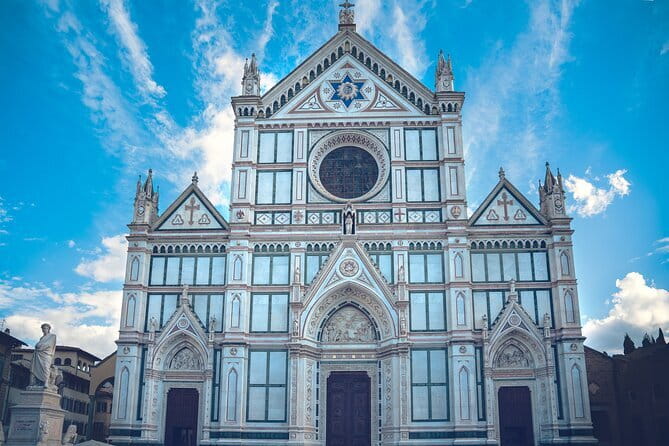
Basilica of Santa Croce: Where Legends Rest in Florence
Book on Viator →Operated by Star Europe Tours · Bookable on Viator
Santa Croce tells stories in paint and marble. This guided visit is interesting because you don’t just walk in—you get the map to what matters, from Giotto frescoes to the big-name tombs. I especially like the radio system (you actually hear the guide) and the chance to focus on major artwork like Brunelleschi’s chapel instead of wandering blind. One caution: the church has a strict dress code, and if you show up with bare shoulders or uncovered knees, entry can be refused.
I’ve also found the best part is the human layer. In the notes left by past visitors, the guides named Silvia, Armida, and Guido come up as funny, warm, and story-forward—exactly what you want for a one-hour stop that covers a lot of ground.
In This Review
- Key points worth planning for
- Santa Croce in an hour: what you’re really buying
- Getting inside: Piazza di Santa Croce and the June Calcio Storico link
- Cappella Maggiore and Giotto scenes you might miss alone
- Brunelleschi’s chapel: architecture you can feel
- Donatello’s crucifix and other pinpoint stops
- The big-name tombs: Michelangelo, Galileo, Machiavelli
- The monumental cemetery and restoration after flood damage
- How the guide and radio system change the experience
- Timing and weather: plan for the real Florence day
- Dress code: the rule that can ruin your plan
- Optional Tuscan wine tasting with pairings: worth it if you like a finish
- Price and value: when $56.48 actually makes sense
- Who this tour fits best (and who might skip it)
- Should you book this Santa Croce guided tour?
- FAQ
- What is the duration of the Santa Croce guided tour?
- How much does it cost?
- What’s included in the tour price?
- Do I need to bring anything for the dress code?
- How does the wine tasting option work with timing and meeting points?
- Is the tour limited in size?
- What happens if I arrive late or need to cancel?
Key points worth planning for
- Official certified guide plus a radio system so the art and stories stay clear even in busy rooms
- Brunelleschi, Giotto, Donatello, and chapel-by-chapel context without needing to study before you go
- A focused look at the final resting places of major figures tied to Florence’s ideas and influence
- Cappella Maggiore and fresco cycles explained in plain terms, not art-class jargon
- Monumental cemetery highlights including restoration work after flood damage
- Optional Tuscan wine tasting with pairings, tied to specific start times and a second meeting point
Santa Croce in an hour: what you’re really buying
Santa Croce is one of those places where a self-guided visit can feel a little random. You see beautiful walls, sure. But with a guide, you start noticing patterns: who commissioned what, how scenes connect, why certain chapels were built when they were. That’s what you’re paying for.
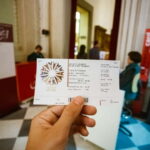
This tour lasts about one hour, which is a sweet spot if you want the essentials without turning your day into a church marathon. The group is also capped at 20 travelers, so it doesn’t feel like a moving cattle pen. Add the entrance ticket and you’re not doing extra paperwork once you arrive.
The price is $56.48 per person. In Florence, that isn’t bargain-basement pricing. Still, the value makes sense if you care about meaning, not just photos—especially because you’re getting both a certified guide and a listening setup that makes the tour work even when the church gets busy.
You can also read our reviews of more tours and experiences in Florence.
- Tuscany Day Trip from Florence: Siena, San Gimignano, Pisa and Lunch at a Winery
★ 5.0 · 21,634 reviews

Getting inside: Piazza di Santa Croce and the June Calcio Storico link
Before you even step into the basilica, you’re in the orbit of Piazza di Santa Croce. It’s not just a pretty square. In June, the area is known for Calcio Storico—big, loud, traditional football-style play that’s tied to Florentine identity.
That matters because Santa Croce is also a social stage. The basilica sits in a civic landscape, not a museum bubble. When your guide points out the connections between the square and the church’s long public role, the place starts to feel alive, not sealed off behind glass.
Cappella Maggiore and Giotto scenes you might miss alone
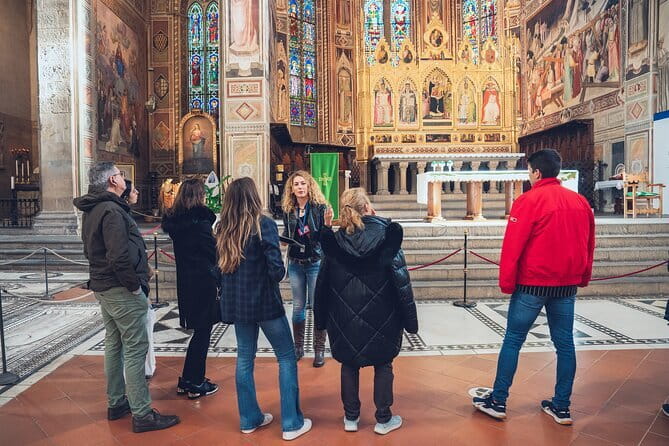
Once inside, your first real art lesson begins with the Cappella Maggiore and the fresco work by Gaddi. Without context, it can be hard to tell where to look first. With a guide, you learn what the scenes are trying to say and how the church presents its own story.
Then you move into the Bardi and Peruzzi chapels, where your stop turns into a Giotto highlight. Giotto’s work is famous, but the payoff on a timed tour is learning how to read the images quickly: who’s being depicted, what story arc is happening, and why these chapels became important stops for patrons and visitors.
The big win here isn’t that you see famous names. It’s that you know what you’re looking at when the photos end and you want to remember the experience.
Brunelleschi’s chapel: architecture you can feel
Florence bragging rights include Renaissance architecture, and this tour gives you a direct hit with a visit to the Cappella de’ Pazzi, designed by Brunelleschi.
Architecture like this is subtle in real life. Up close, you start noticing proportions and the calm logic of the space. If you’re used to grand but chaotic interiors, this one feels controlled. That emotional contrast is one reason the chapel lands so well on a short itinerary. You don’t need to be an architecture nerd. You just need to stand there for a few minutes and let it work.
Donatello’s crucifix and other pinpoint stops
This tour doesn’t only do the biggest-famous pieces. It also includes smaller, high-impact details—exactly the sort of things that make a guide worth it.
You’ll hear about Donatello’s jewel-like crucifix, which is the kind of object that can get overlooked if you’re racing from chapel to chapel. Your guide helps you slow down just enough to see what makes it special.
You also get a look at a memorial to playwright Niccolini, described in the tour context as a forerunner to the Statue of Liberty. That’s a fun mental hook: it ties the church to broader European cultural symbolism, not just local art.
- The Best tour in Florence: Renaissance & Medici Tales – guided by a STORYTELLER
★ 5.0 · 12,316 reviews




The big-name tombs: Michelangelo, Galileo, Machiavelli
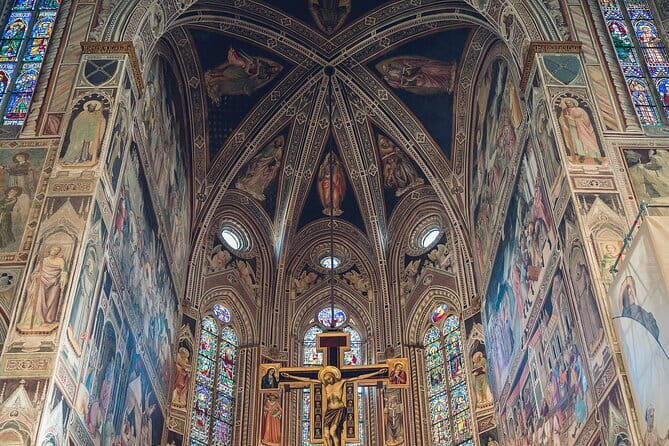
Santa Croce is often called a kind of shrine to Florence’s thinkers and artists, and the tour points you toward the final resting places of Michelangelo, Galileo, and Machiavelli.
That part can hit you differently depending on what kind of traveler you are. If you love art, it’s a confirmation that creativity lives in real bodies and real stories. If you love history, it’s a reminder that ideas have homes—and those homes can be places of faith and public memory at the same time.
For me, the practical benefit is that the guide helps you connect names to context quickly. You spend less time trying to locate where to look and more time understanding why the basilica became the symbolic place for these legacies.
The monumental cemetery and restoration after flood damage
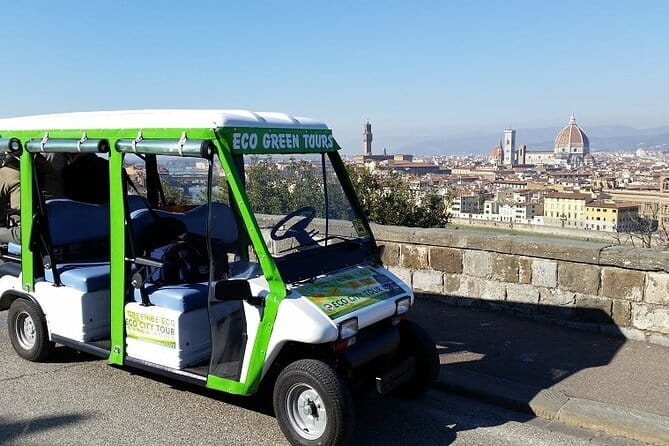
Another stop is the monumental cemetery, and the tour includes the fact that restoration has brought flood-damaged paintings back. That detail does more than add drama. It frames Santa Croce as a living site under care and repair, not a frozen stage set.
Cemeteries can be uncomfortable if you’re not in the mood. But explained well, this is where the basilica stops being only about art styles and becomes about endurance—how culture is preserved, protected, and rebuilt after disasters.
How the guide and radio system change the experience
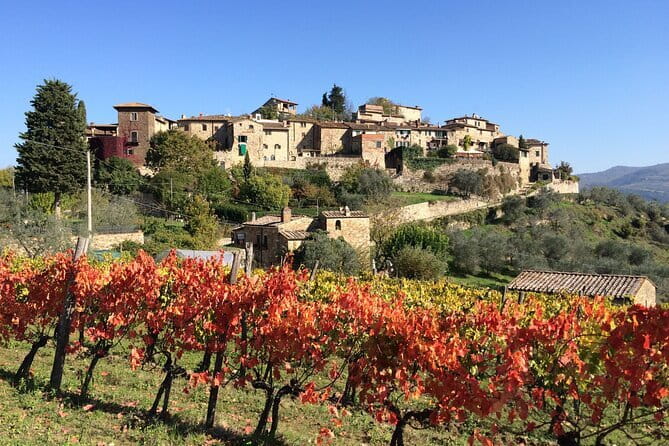
In churches, the audio problem is real. Stone absorbs sound. Crowds move. People whisper to themselves while hoping they’re hearing the guide well enough.
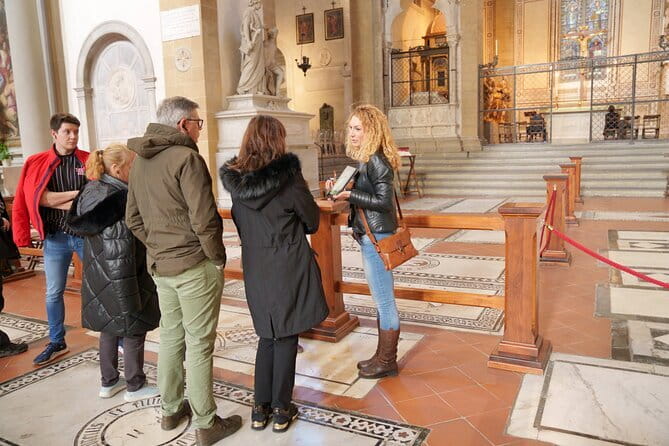
That’s why I’m a big fan of the radio system on this tour. It gives you a way to follow the stories without craning your neck or guessing. With that setup, the guide can explain fresco programs and architectural points clearly, and you don’t lose the thread halfway through.
Also, your group size stays reasonable at up to 20 travelers, so the pacing feels controlled. For a one-hour tour, that matters. Too many people can turn even a great guide into background noise.
Timing and weather: plan for the real Florence day
This tour runs in all weather conditions, so you should dress accordingly. Florence can go from bright to rainy without warning, and you’ll be outside for parts of the experience.
Plan your day so you can arrive on time. If you get there late, you won’t be able to join, and you won’t get a refund or reschedule. That’s not a “nice to know.” It’s the sort of thing that saves your trip from needless stress.
Dress code: the rule that can ruin your plan
If you take nothing else from this review, take this. The basilica requires a dress code: no shorts and no sleeveless tops. Your knees and shoulders must be covered.
If you don’t meet the requirement, you risk being refused entry, and the tour isn’t rescheduled or refunded. This is one of those “small rule, big consequence” issues, especially in summer.
Bring a light layer if you’re traveling in hot weather. A scarf or thin shawl can save your afternoon if your shirt is tank-top thin.
Optional Tuscan wine tasting with pairings: worth it if you like a finish
This is a smart add-on if you want your Santa Croce visit to lead into a taste of Tuscany, not end abruptly in the square.
The tour includes a wine tasting and pairing class if you select that option, and it comes with pairings (not just sipping). The only thing to watch is timing: when the Santa Croce guided tour is scheduled at 10:30am or 3:00pm, it may start later, then the wine tasting happens after, at meeting point 02.
If you have intolerances or allergies, alert the team when booking and again before the tour. That’s not just a courtesy—pairings matter, and you want to avoid surprises.
Price and value: when $56.48 actually makes sense
At $56.48, you’re paying for structure. You’re also paying for two things that are hard to replicate on your own:
1) An official certified guide who can explain what you’re seeing in a limited time
2) A radio system, which keeps the information coming clearly
If your goal is only quick photos and a walk through famous rooms, you could do Santa Croce without a guide. But if your goal is to leave with a real understanding—Giotto stories, chapel logic, what the tombs symbolize—this tour makes the experience more efficient.
Also consider the timing. For many visitors, this is a one-hour window between other Florence stops. A guided route prevents you from spending half that hour trying to figure out what’s most important.
Who this tour fits best (and who might skip it)
This tour fits best if you:
- want the biggest Santa Croce highlights in one hour
- care about meaning, not just seeing
- like having someone point out what to notice, especially for frescoes and chapels
- want the extra comfort of a radio system
- are open to adding the optional wine tasting with pairings
You might want to skip or consider another format if:
- you’re trying to visit at the absolute last minute and can’t manage the strict dress code
- you prefer totally free wandering and don’t want a set pace
- you’re sensitive to any situation where you could be turned away for clothing
Should you book this Santa Croce guided tour?
I think you should book if Santa Croce is on your Florence must-do list and you want to get more out of it than a beautiful interior and a few famous names. The certified guide plus radio system turns an easy-to-get-lost church visit into a focused learning experience—right-sized for a busy itinerary.
If you’re on the fence, make your decision on two factors: your willingness to follow the dress code and your interest in understanding Giotto, Brunelleschi, and the meaning behind those tombs. If both are yes, this is a solid use of time in Florence.
FAQ
What is the duration of the Santa Croce guided tour?
The tour is about 1 hour.
How much does it cost?
The price listed is $56.48 per person.
What’s included in the tour price?
It includes an official certified guide, entrance tickets, and a radio system to hear the guide clearly. If you choose the wine option, it also includes a wine tasting and pairing class.
Do I need to bring anything for the dress code?
Yes. You must wear clothing that covers your knees and shoulders. Shorts and sleeveless tops are not allowed, and you may be refused entry if you don’t meet the requirements.
How does the wine tasting option work with timing and meeting points?
If you select wine tasting, the Santa Croce guided tour running at 10:30am or 3:00pm may start later, and then the wine tasting tour happens afterward at meeting point 02.
Is the tour limited in size?
Yes. The tour has a maximum of 20 travelers.
What happens if I arrive late or need to cancel?
If you arrive after the tour start time, you will not be able to join and you will not be refunded or rescheduled. You can cancel for a full refund up to 24 hours before the experience’s start time.
You Might Also Enjoy


More Tour Reviews in Florence
- Tuscany Day Trip from Florence: Siena, San Gimignano, Pisa and Lunch at a Winery
★ 5.0 · 21,634 reviews - The Best tour in Florence: Renaissance & Medici Tales – guided by a STORYTELLER
★ 5.0 · 12,316 reviews